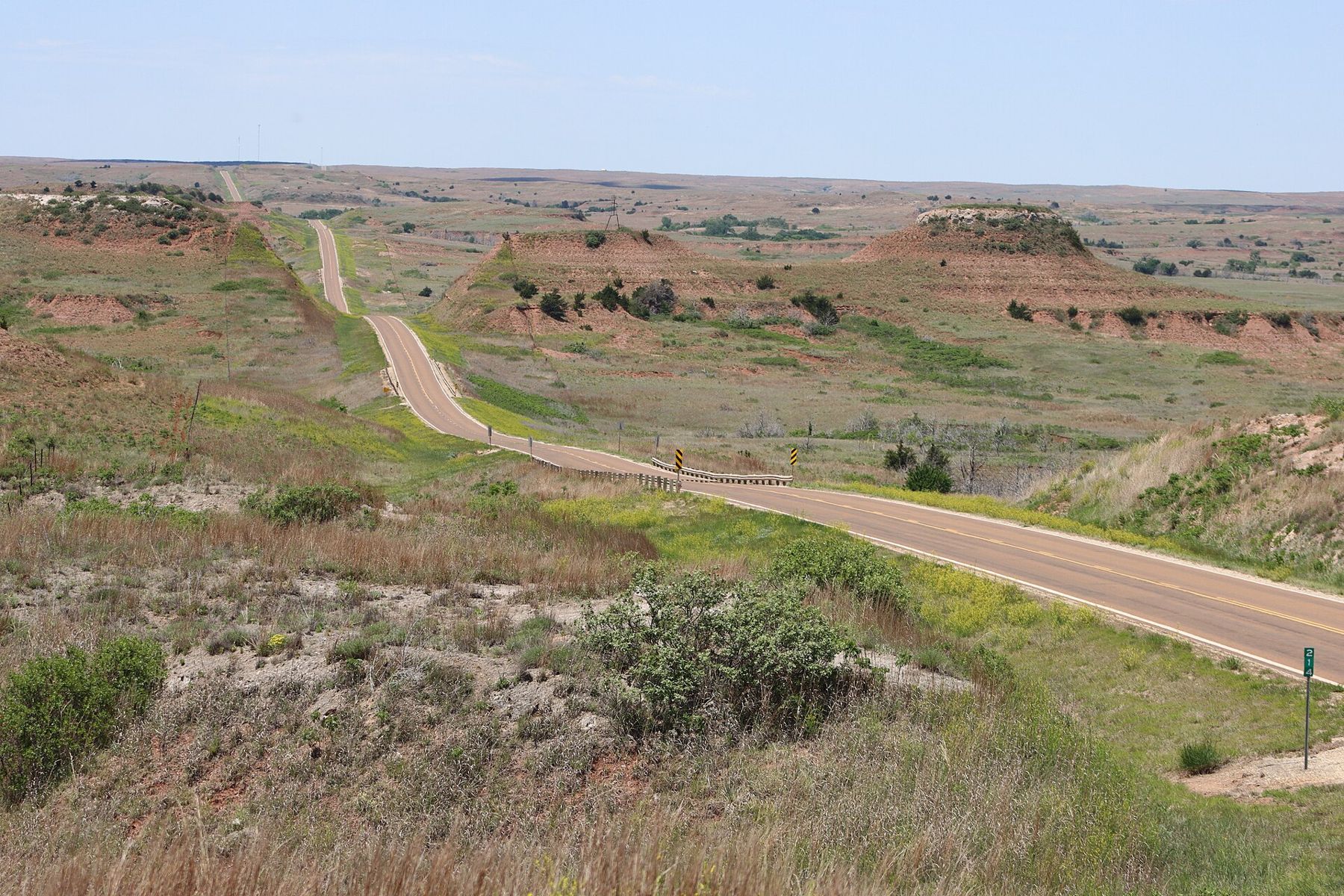
West of Medicine Lodge the wheat gives way to red earth, flat-topped mesas and cattle range. Drive it late in the day, when the low sun sets the hills burning.
US-160 is paved two-lane with few shoulders. Fuel in Medicine Lodge or Coldwater. The red clay side roads turn slick and sticky after rain, and cell signal fades in the canyons.
Where the wheat stops
For most of the drive across south-central Kansas the land is flat and the color of wheat. Then, just west of Medicine Lodge, the ground breaks. Red soil shows through the grass, low ridges become steep slopes, and flat-topped buttes stand up against the sky with white caps of rock on their crowns. These are the Gypsum Hills, also called the Red Hills, and locally just the Gyp Hills.
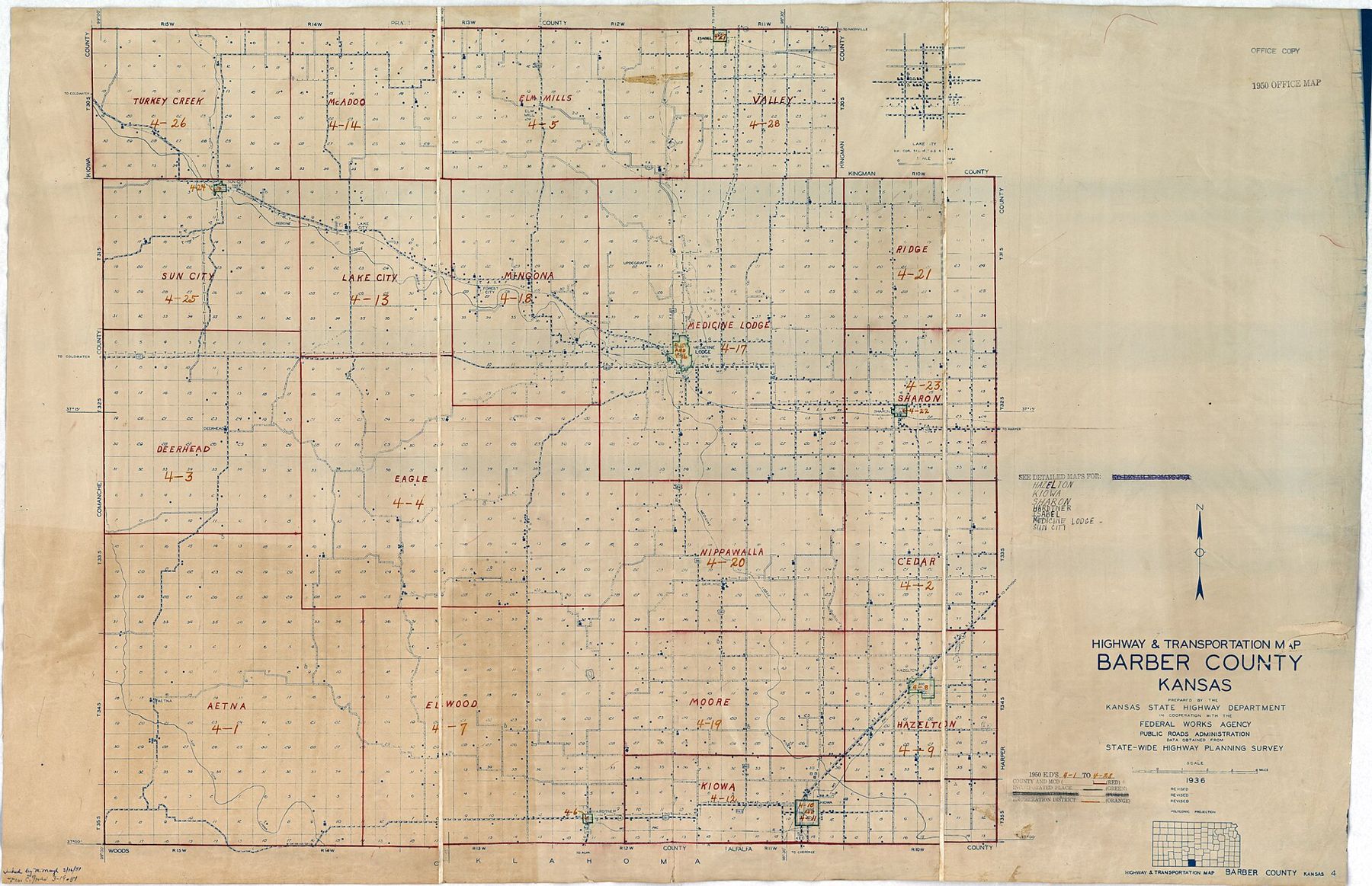
The Gypsum Hills Scenic Byway follows US-160 for about forty miles from Medicine Lodge in Barber County west to Coldwater in Comanche County. It is a state scenic byway, a plain two-lane highway with no visitor centers and few signs, and that is part of its appeal. The country does the work.
Red earth, white caps
The red comes from very old rock. The slopes are cut into beds of red shale, siltstone and sandstone laid down in the Permian period, long before the dinosaurs, when this part of the continent lay near a shallow, drying sea. Iron in the sediment rusted, and the color stayed. Above the red beds lie harder layers of white gypsum and dolomite. Where streams have worn down through the soft red rock, those hard layers protect the tops of the hills, leaving mesas and buttes with pale rims and steep red sides.
Gypsum dissolves in water, so the hills also hold sinkholes, small caves and hollows where the ground has slumped. Gypsum has long been mined in the area, and it still is near Medicine Lodge, where it goes into building products.
The vegetation tells its own story. Mixed-grass prairie covers the slopes, with little bluestem, sideoats grama and buffalograss, and cottonwoods and hackberries line the creeks. Dark eastern red cedars dot many hillsides. Cedar was kept in check for thousands of years by fire; with fewer fires, it has spread fast across the hills, and ranchers now cut and burn to hold it back.
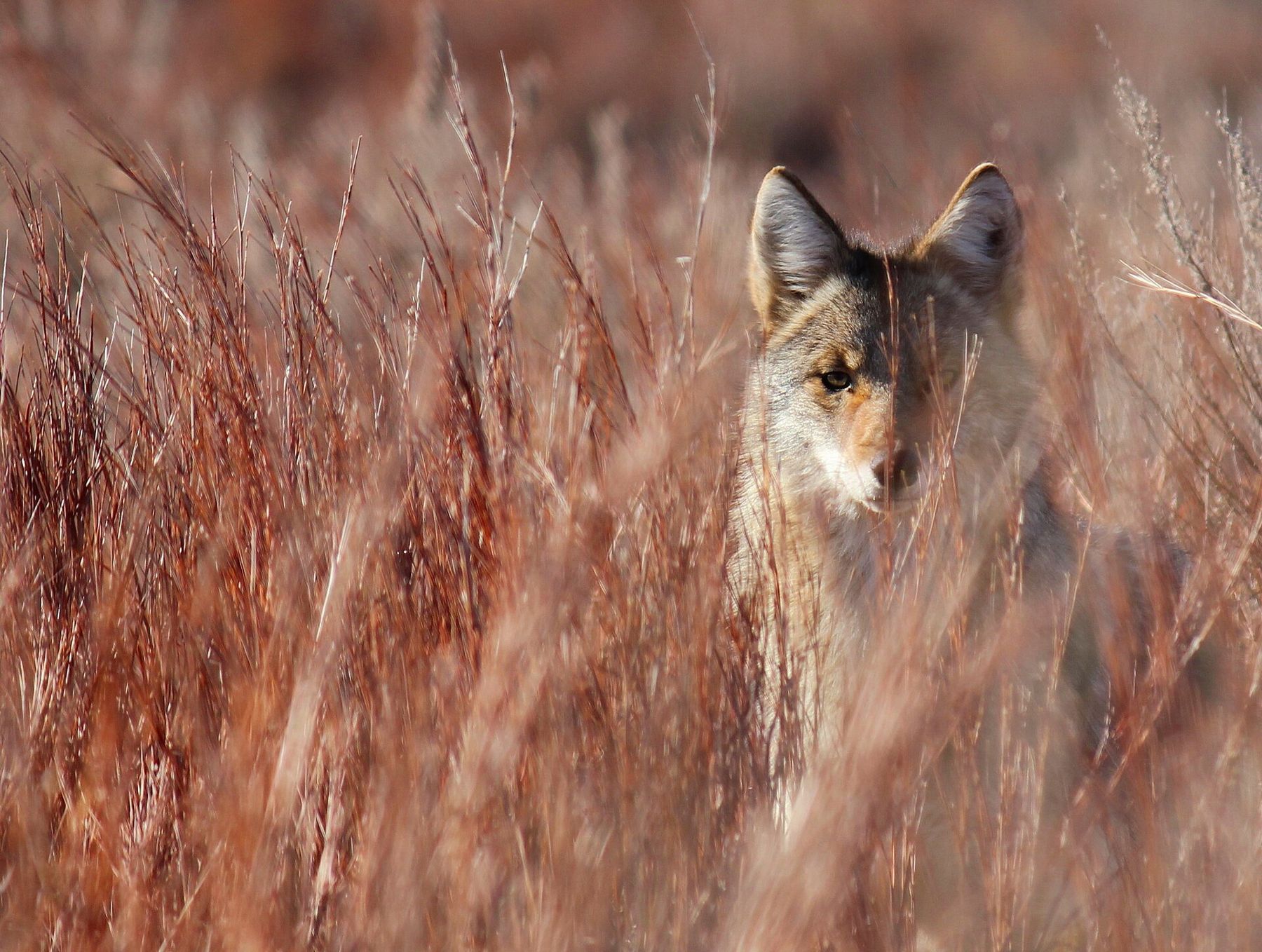
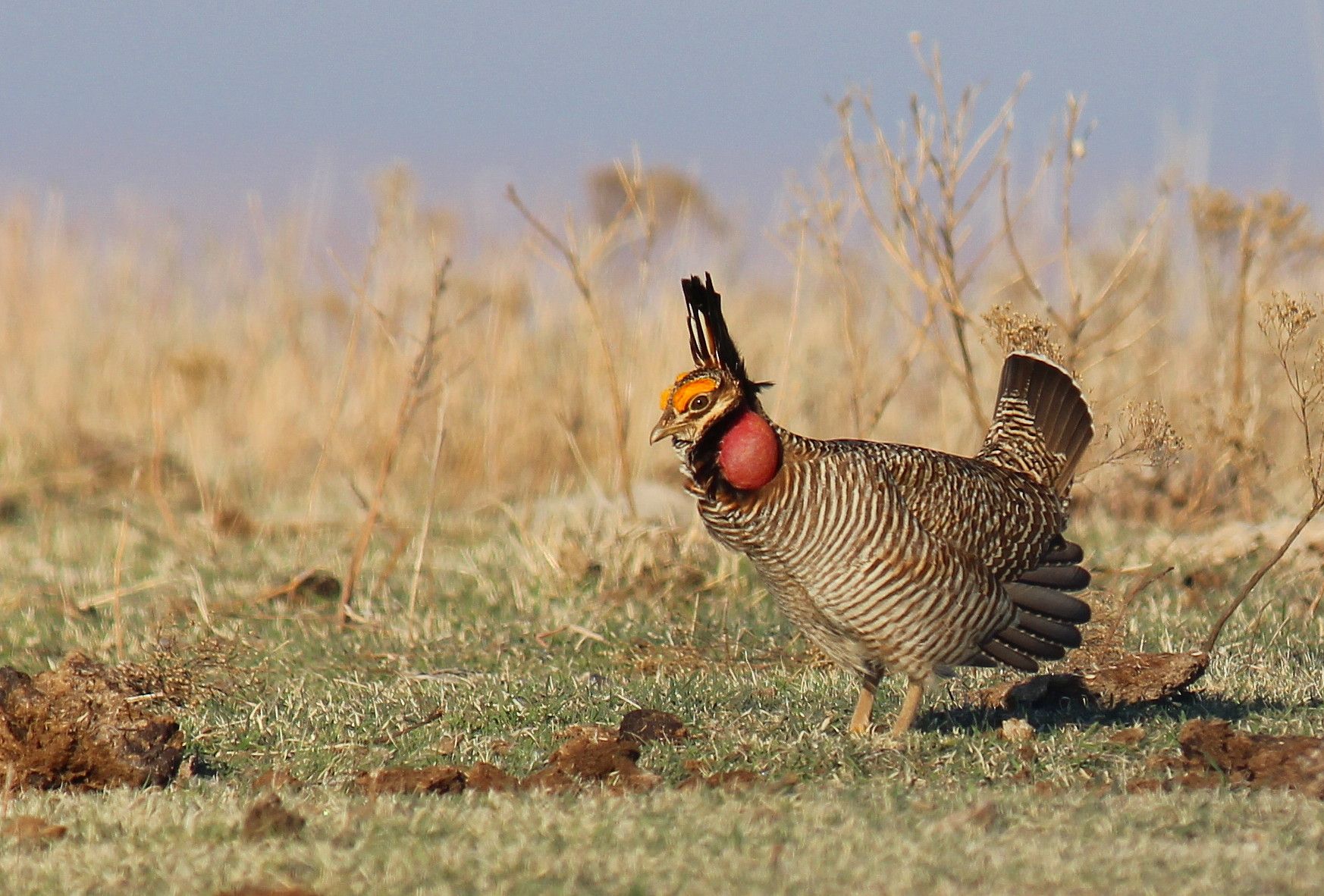
Wildlife is easy to find if you watch the edges. Wild turkeys feed along the creek bottoms, mule deer and white-tailed deer graze the draws in the evening, bobwhite quail call from the brush, and hawks ride the updrafts off the slopes. Coyotes hunt the grass at dawn and dusk. The Red Hills are also one of the Kansas strongholds of the lesser prairie-chicken, a grouse of the southern plains whose males gather on open ground each spring to display; if you come across a lek, watch from your vehicle and keep well back. The Medicine Lodge River winds out of the hills from the northwest and runs past town under a line of cottonwoods; its valley, with water and timber in a dry country, is the reason people have gathered here for so long.
The drive west
Leave Medicine Lodge on US-160 and within a few miles you climb onto the first ridges. There is a pull-off with a wide view not far west of town; it is a good place to stop, get out, and look south over the broken red country toward Oklahoma. Beyond it the highway runs along the tops and across the valleys, past ranch gates, stock tanks and long views to mesas on the horizon.
 Turn off hereThe Medicine Lodge treaties of 1867
Several county roads leave the highway and run south into the hills on gravel. They are worth exploring in dry weather, slowly, with a full tank and a good map. The red clay that colors the hills becomes slick and sticky when it is wet, and even a short shower can make a gravel road dangerous for a car. Read up on driving the back roads before you leave the pavement, and turn around rather than push on if the road gets bad.
Most of what you see is private ranch land, worked by families who have run cattle here for generations. Stay on the roads, do not open gates, and give way to cattle, trucks and machinery. The Gyp Hills are cattle country first and scenery second.
The last hour of light
The byway is worth driving at any hour, but the evening is when it shows itself. As the sun drops, the light turns low and warm and the red slopes deepen to rust, then crimson, with the white caps of the buttes glowing above them. Shadows run long down the draws and every fold of the land stands out. On a clear evening the colors last from about an hour before sunset until the sun drops below the far ridges.
Driving west into a low sun has its hazards. The glare can blind you on the crests, and cattle, deer and slow farm vehicles all use the road at dusk. Keep your speed down, use your visor, and pull completely off the road before you stop for a photograph. The best plan is to drive out in the afternoon, find a safe pull-off facing east or north with the red hills lit in front of you, and let the light come to you.
After sunset the sky goes deep blue over the dark mesas, and on a moonless night the stars come out in numbers you will not see near any city. The hills are some of the darkest country in this part of Kansas; read about the night sky if you plan to stay out late.
Fire and weather
The Gyp Hills burn. In March 2016 a wildfire driven by high wind crossed from Oklahoma into Barber and Comanche counties and burned several hundred thousand acres, the largest fire in Kansas history at the time. Ranchers lost cattle, fences and homes, and the land has been recovering since. Cedar-choked slopes burn hot, which is one reason ranchers work so hard to clear them.
In late winter and spring, watch for fire danger warnings and burn bans, and never toss anything that could start a fire. Spring and early summer are also storm season. Follow official warnings, get to solid shelter low in a building early, and never try to chase or get close to a storm.
When to go and what to pair it with
Late April through early June brings green grass against the red soil, with wildflowers and the occasional sound of turkeys in the creek bottoms. September and October bring drier air, clear evenings and grass that turns copper and bronze. Midsummer is hot, and the light is harsh until very late in the day. Winter can be beautiful on a still, clear day, with the red hills under a dusting of snow.
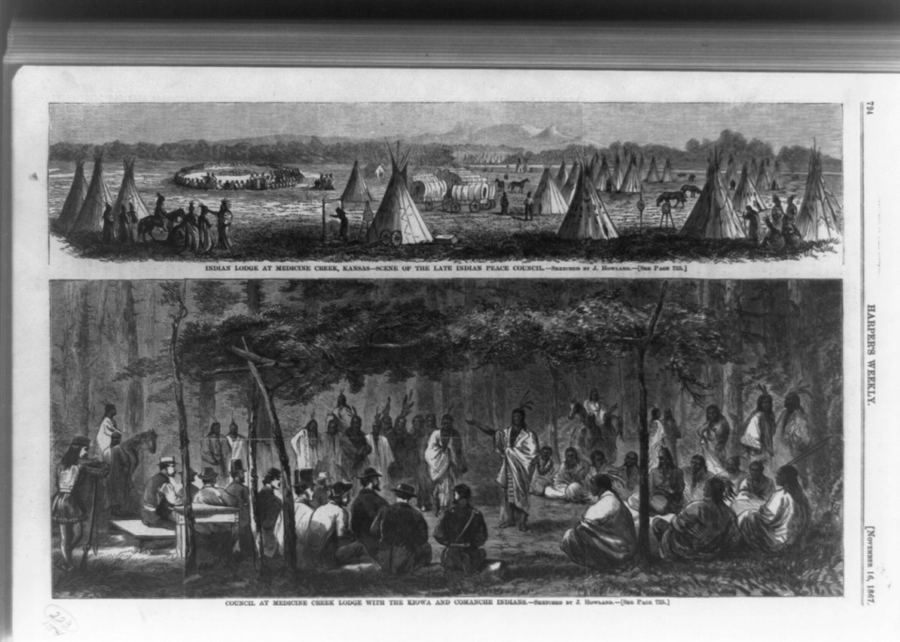
Start or end the drive in Medicine Lodge, where the story of the 1867 treaties and the house of Carry Nation fill a morning. At the west end, Coldwater is a small county seat with a lake on the edge of town. Bring your own food and water: services are thin, and the hills are best enjoyed without watching the clock.
The Gyp Hills are cattle country first and scenery second.
Camera work
- AbennethCC BY-SA 4.0
- Unknown author Unknown author or not providedPublic domain
- USFWS Mountain-PrairiePublic domain
- USFWS Endangered SpeciesPublic domain