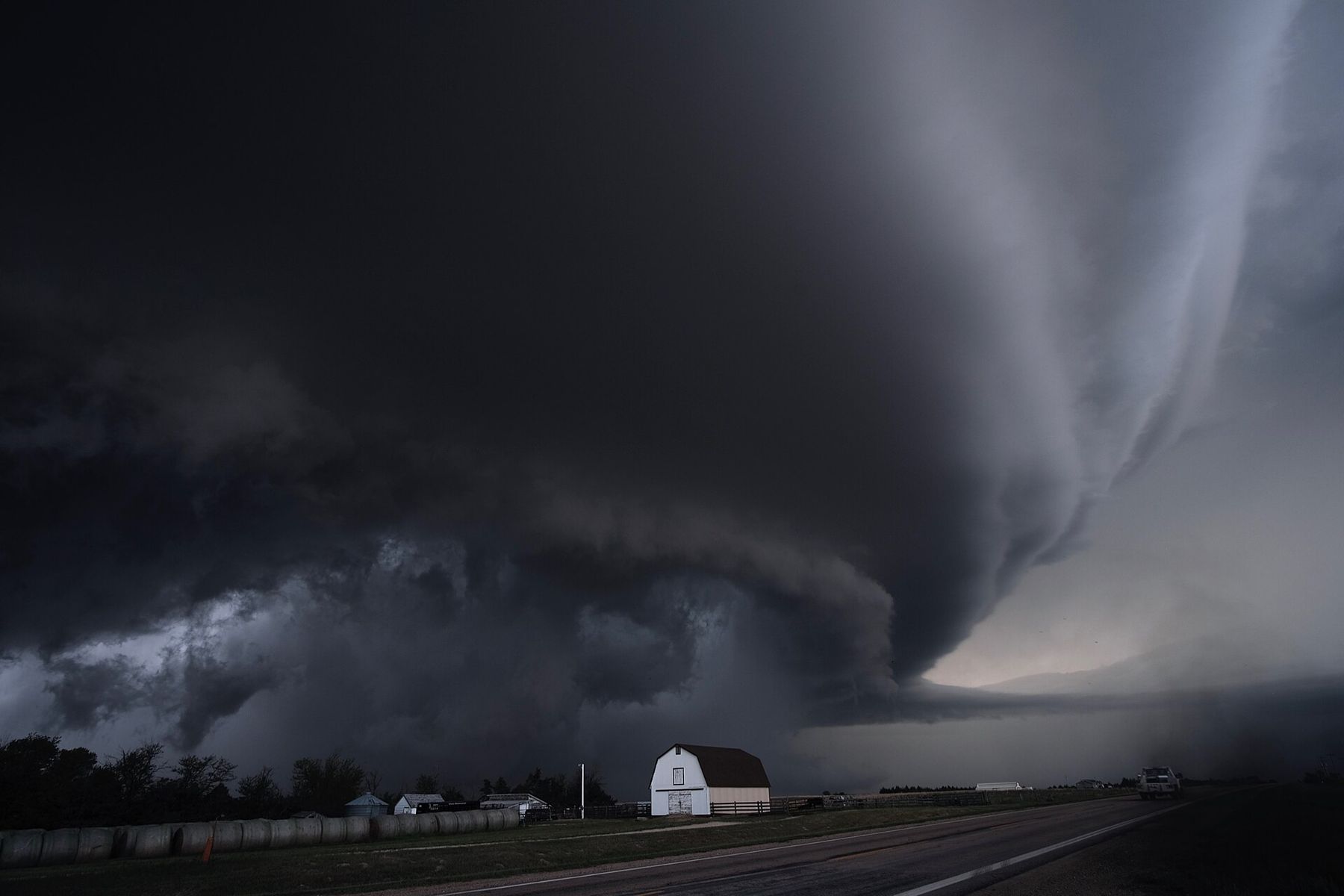
From April into summer, the plains build some of the most powerful thunderstorms on earth. Watching from a safe distance is fine; following warnings is not optional.
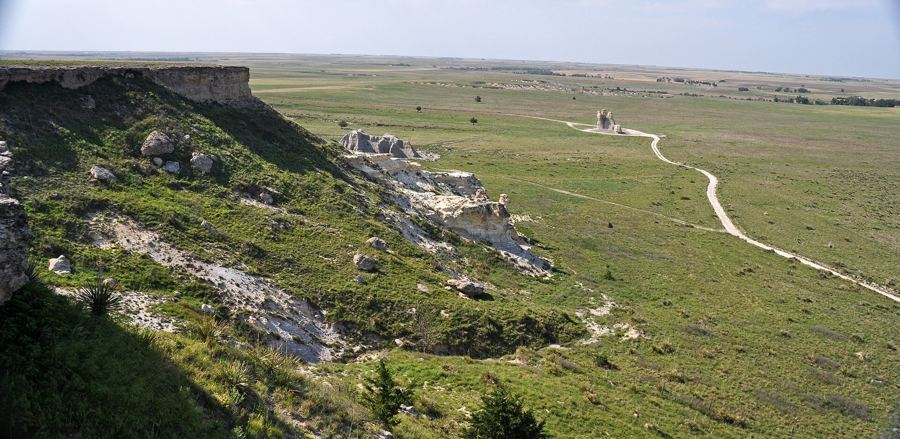
Dirt and gravel roads turn to impassable mud in heavy rain. Keep the tank full, know your nearest town, and never drive into water over the road.
Spring on the plains comes with weather you can see coming from fifty miles away. On a warm, humid afternoon a cloud tower rises in the west, flattens into an anvil at the top of the sky, and by evening the light turns green-gray and the wind changes direction. It is one of the great sights of the region. It is also dangerous, and the first rule of storm season is simple: follow official warnings, get to shelter early, and never chase.
Why the plains build storms
In spring, warm, moist air flows north from the Gulf of Mexico at low levels. Dry air comes off the high country to the west, and strong winds blow aloft. Where these meet, storms can grow quickly to great heights. When winds change direction and speed with height, some storms begin to rotate. These rotating storms, called supercells, produce most of the large hail and strong tornadoes on the plains.
In Kansas, the most active tornado months are usually April, May and June, with May often the busiest, but severe storms can happen at almost any time of year. Large hail, damaging straight-line winds, lightning and flash flooding are more common than tornadoes, and they cause much of the harm.
Watches, warnings and sirens
The National Weather Service issues two kinds of alerts, and the difference matters.
- A watch means conditions are favorable for severe storms or tornadoes in a broad area over the next several hours. Stay alert and plan where you would go.
- A warning means a severe storm or tornado is happening or is imminent for a specific area. Act now.
Outdoor warning sirens are meant for people outside. You may not hear them indoors, in a car or in wind and rain, and some rural areas have none. Keep a phone charged with emergency alerts turned on, and consider a weather radio. Check the forecast every morning in spring, and know which county you are in, since warnings are issued by county and area.
Where to shelter
 Turn off hereDriving the back roads
The best shelter is a basement or storm cellar. Without one, go to an interior room on the lowest floor of a sturdy building, away from windows: a bathroom, closet or inner hallway. Cover your head and neck. Motels, schools, courthouses and many public buildings in Kansas towns have designated shelter areas; ask when you check in or arrive.
A car is a poor place to ride out a tornado. If a warning is issued and you are on the road, the safest choice is to drive, early, to a sturdy building in the nearest town. Do not shelter under a highway overpass; wind speeds can increase there, and people have died doing it. If you are caught with no building in reach, the official advice is to stay in the car with the seatbelt on and your head down below the windows, or to lie in a ditch or low spot away from the car, covering your head.
Mobile homes and light structures offer little protection. Leave them for a sturdy building well before the storm arrives.
Hail, lightning and water
Hail on the plains can be larger than a baseball. It breaks windshields and causes serious injuries. If hail starts while you are driving, pull well off the road where you can stop safely, face away from the storm if possible, and keep away from the windows.
Lightning strikes far from the storm itself. When you hear thunder, you are close enough to be struck: go inside a building or a hard-topped car and stay there for half an hour after the last thunder. Open ground, hilltops and lone trees are the worst places to be.
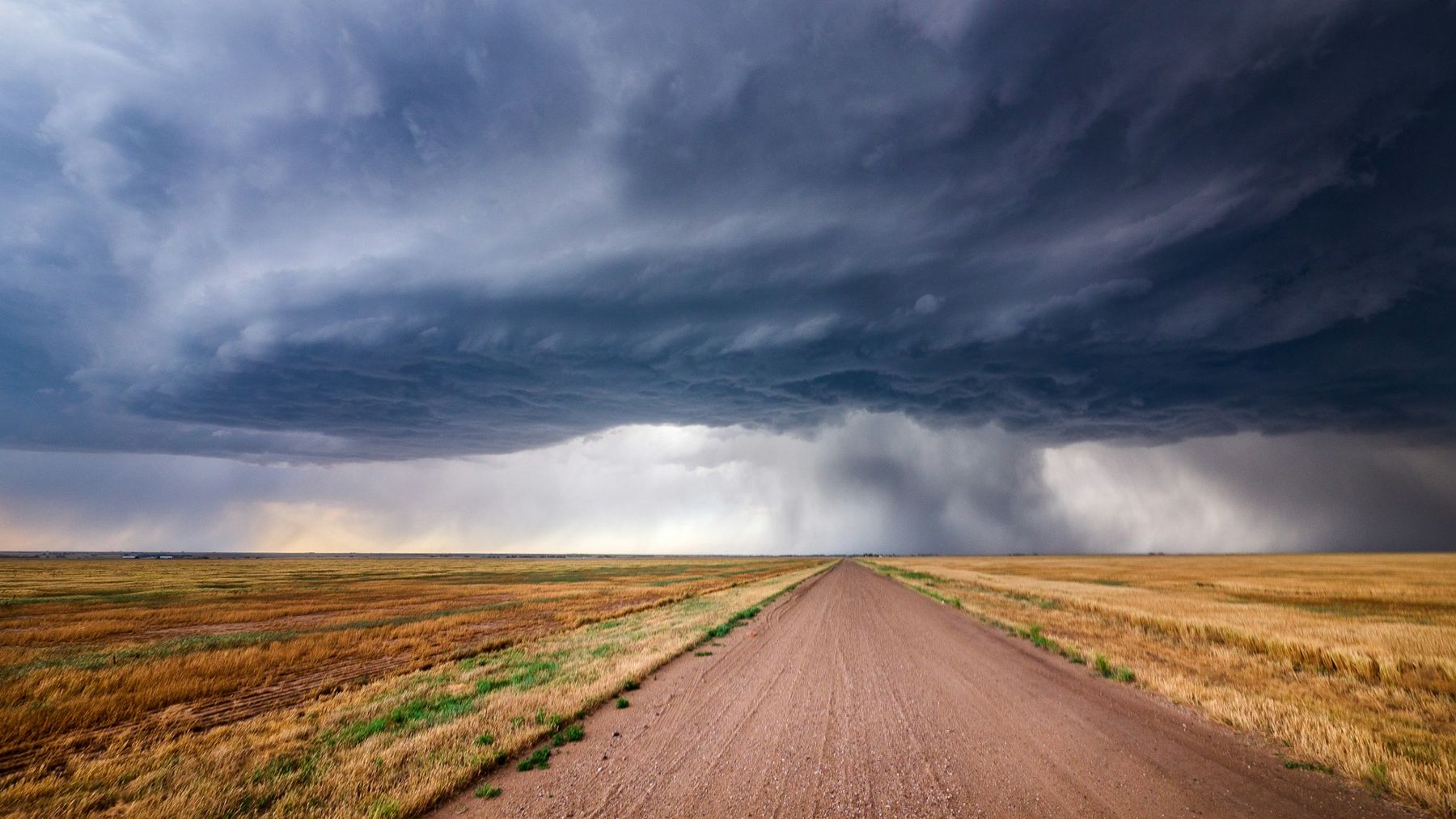
Flash flooding kills more people in storms than many expect. Low-water crossings and creek bottoms fill quickly, and moving water a foot deep can carry a car away. If water covers the road, turn around. On gravel and dirt roads, heavy rain turns the surface to deep, slick mud that can strand a car for hours.
Why not to chase
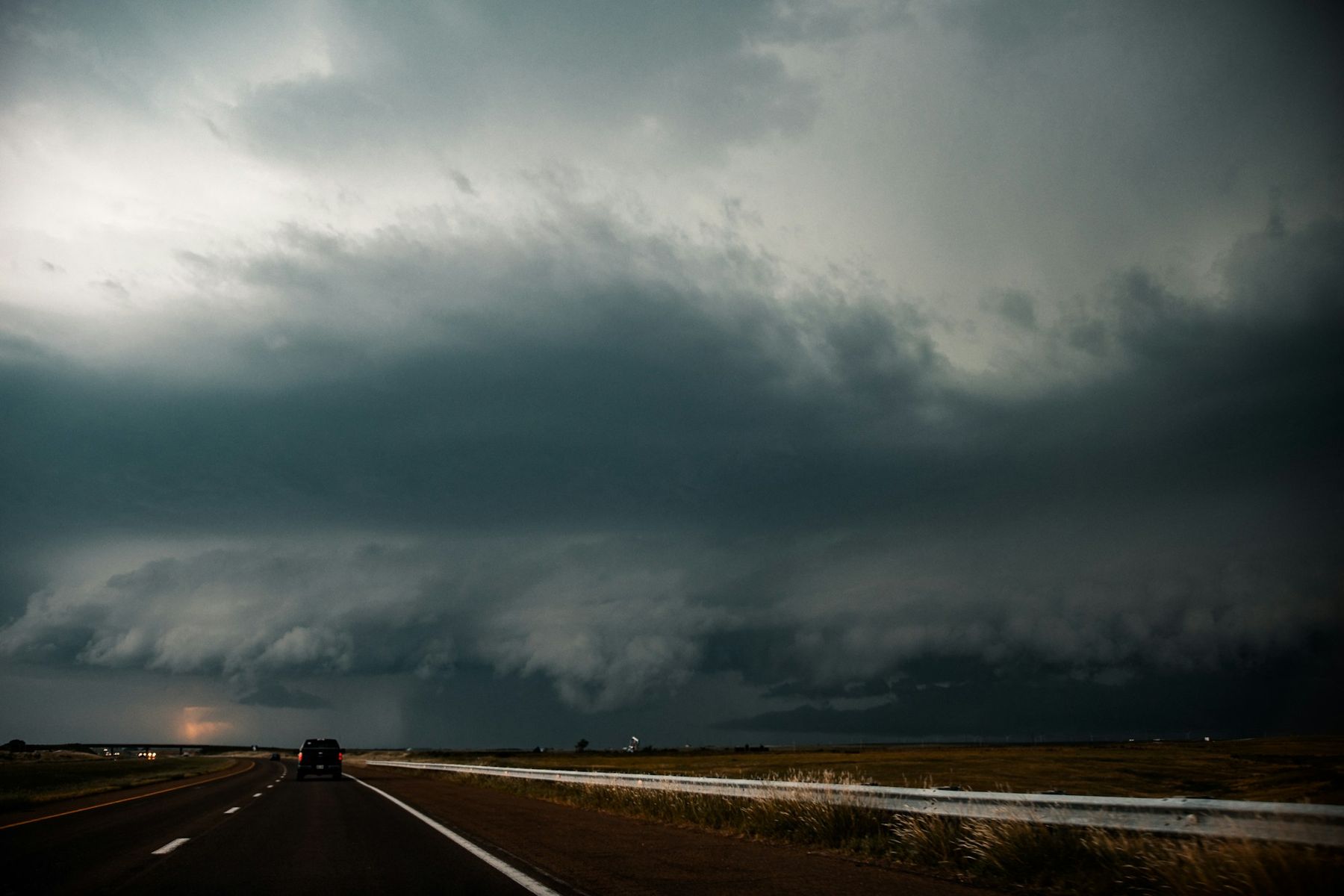
Storm chasing looks easy on screen. It is not. Storms move fast and change direction, rain and hail hide the most dangerous parts of them, and roads on the plains follow a grid that does not care where the storm is going. Professional researchers and forecasters train for years and still take serious risks. Crowds of amateur chasers on narrow roads add traffic hazards that block emergency crews.
If you want to see a plains storm, watch it from shelter in town as it passes, or from a safe distance with a clear route away from it. Never drive toward a storm, never follow one, and never stop on a road to watch.
Travelling in season
None of this means you should avoid the plains in spring. Most days are fine, the grass is green and the crane marshes fill with birds. In early summer the wheat harvest races to beat the storms, because a single hailstorm can flatten a crop days before cutting. Plan flexible days, check the forecast each morning, keep the tank full and know where the nearest town is. The storms are part of the country. Respect them, and you can enjoy watching the sky build from a safe place.
Camera work
- NOAA National Severe Storms LaboratoryPublic domain
- Raychel SannerUnsplash License
- Colin LloydUnsplash License