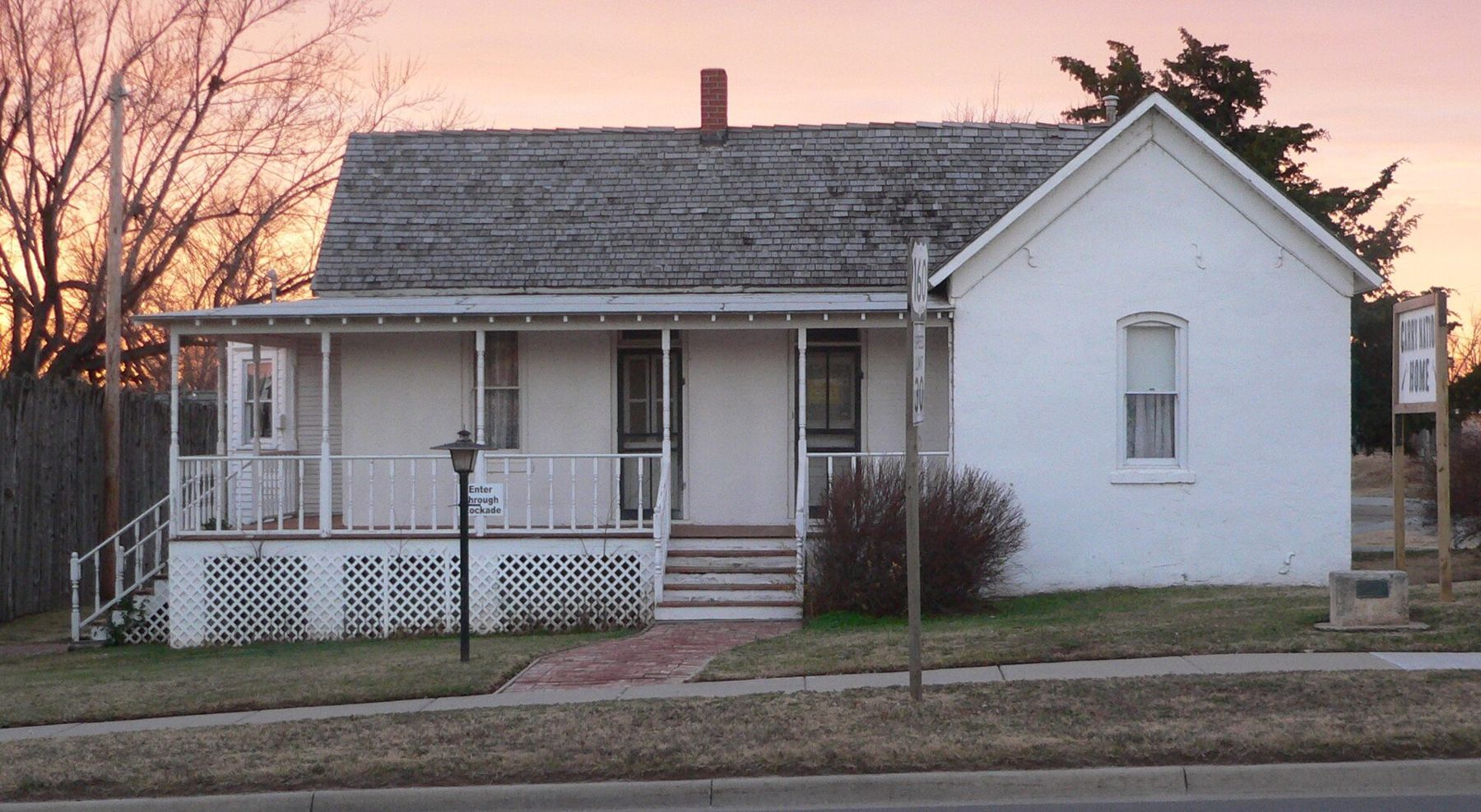
A plain white house on the main road through Medicine Lodge, and the woman who left it with rocks and later a hatchet. Her story, told without the cartoon.
The house sits on US-160 in town, with street parking nearby. Fill up in Medicine Lodge before heading west, where the next towns are small and far apart.
A small house on a busy corner
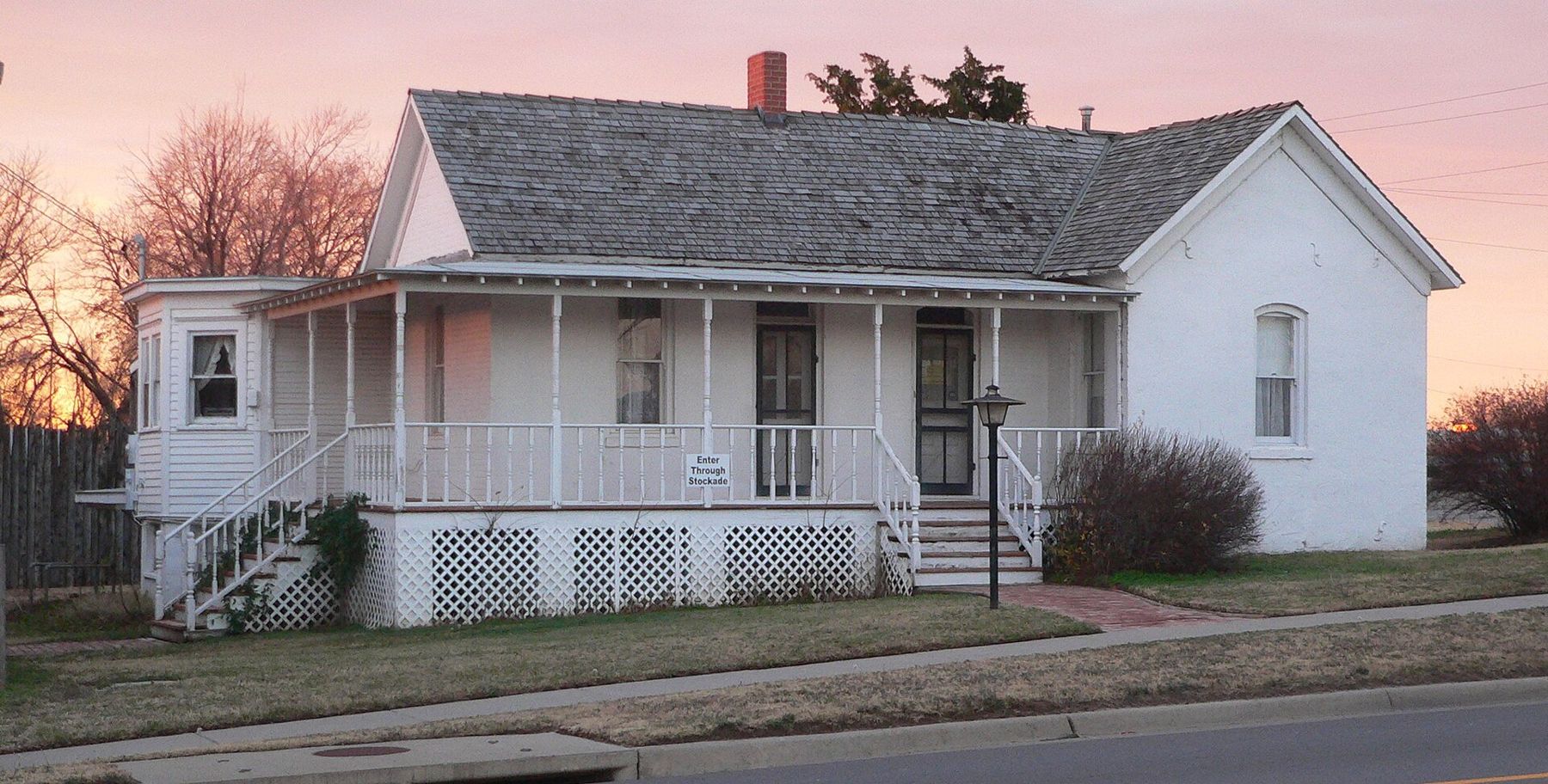
The house stands at the corner of Fowler and Oak streets in Medicine Lodge, a plain one-story white building with a deep porch, right on the highway through town. It is easy to drive past. For most of the 1890s it was home to Carry Nation and her second husband, David Nation, and it was from here that she began the campaign that made her one of the most recognized women in the country by 1901.
The house is a National Historic Landmark and is kept as a museum, with furniture and belongings from her years there. Hours are limited and change with the season, so check before you plan the day around it.
Who she was
She was born Carrie Amelia Moore in Garrard County, Kentucky, in 1846. Her childhood moved between Kentucky, Missouri and Texas, and her family was unsettled; her mother suffered from long periods of mental illness. In 1867 she married Charles Gloyd, a young physician who drank heavily. The marriage collapsed within months, and Gloyd died not long after, leaving her with a daughter and a lasting conviction that drink destroyed families.
She married David Nation, a lawyer, preacher and editor, in 1877. After years in Texas they came to Medicine Lodge, where he took a pulpit. She threw herself into church work and into the local chapter of the Woman's Christian Temperance Union, visiting the jail, feeding the poor and organizing prayer meetings outside places that sold liquor.
A dry state with open saloons
To understand what she did next you need one fact about Kansas. The state amended its constitution to prohibit the manufacture and sale of liquor in 1880, the first state to do so in its constitution. On paper Kansas was dry. In practice, saloons, usually called joints, ran openly in many towns, and local officials often took fines from them as a kind of license fee rather than shutting them.
Carry Nation's argument was simple: the joints were illegal, the law was not being enforced, and so citizens had the right to destroy illegal property. In Medicine Lodge she and other women closed the town's joints mostly by public pressure and prayer. She wanted more.
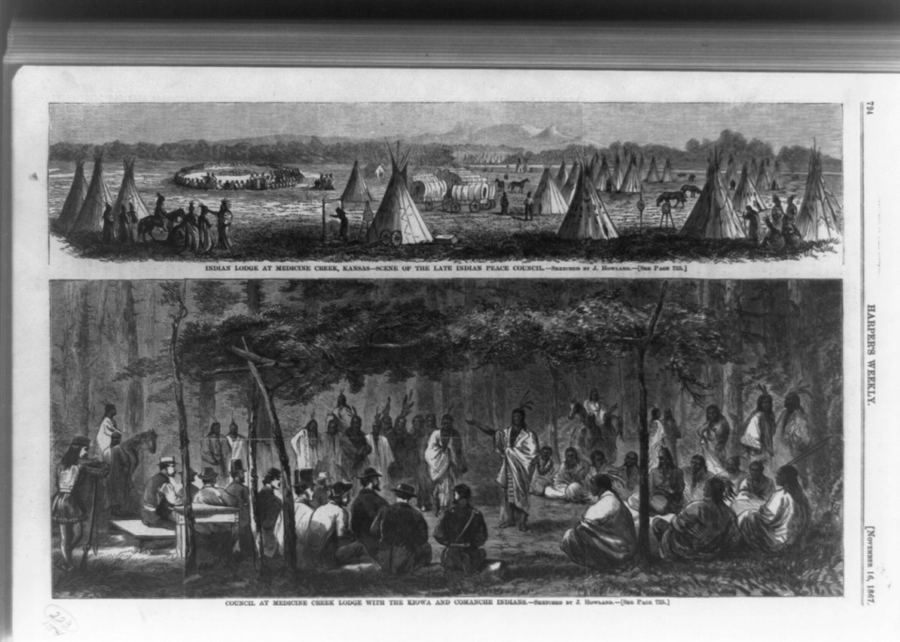 Turn off hereThe Medicine Lodge treaties of 1867
Rocks, then a hatchet
In June 1900 she drove a buggy to Kiowa, a small town south of Medicine Lodge near the Oklahoma line, and wrecked three joints with rocks and bricks. Late that year she went to Wichita and smashed the bar of a large hotel. Early in 1901 she began carrying a hatchet, and the newspapers did the rest. She called her raids hatchetations. Over the next years she was arrested some thirty times and paid her fines with lecture fees and the sale of small souvenir hatchets.
She was nearly six feet tall, dressed in black, and spoke in plain, cutting language. Cartoonists loved her. Saloonkeepers feared her. Many temperance leaders found her methods an embarrassment, even as her fame brought attention to their cause.
Even her name became part of the campaign. Her family had spelled it both Carrie and Carry over the years. She settled on Carry, and later had Carry A. Nation registered as a trademark in Kansas, reading it as a call to carry a nation for prohibition. The spelling stuck, and it is the one on the sign beside the house today.
The fame had a cost. She was attacked by angry crowds more than once, spent nights in cold jails, and was mocked in print and in cartoons in ways that few public men of the time had to endure. She kept going, by her own account, because she believed the work was a duty rather than a choice.
The fair account
It is easy to tell her story as a joke, and much of the national press did. A fairer reading starts from where she stood. Women in Kansas could not vote in state elections until 1912. A wife had few protections against a drunken husband, and drink was bound up with poverty and violence in many households she visited. The law was on her side, and the people paid to enforce it were not doing so.
She was also harsh, self-dramatizing and certain she was guided by God. She attacked tobacco, fraternal lodges and fashionable dress along with liquor, and she was hard on people who disagreed with her. David Nation divorced her in 1901. She spent her last years lecturing, publishing and moving about, and died in Leavenworth in 1911. National prohibition arrived nine years later. Kansas stayed formally dry until 1948.
Seeing the house today
Allow an hour for the house and the replica stockade and museum next door, which together cover the town's early years, including the 1867 treaty council. Walk the few blocks of the old downtown afterward. The building fronts are modest, and the county courthouse gives a sense of the size of the place she set out from.
If you have the evening, drive west on US-160 into the red buttes of the Gypsum Hills Scenic Byway. For the wider sweep of Kansas history in this part of the state, the story of Dodge City without the myths makes a natural next stop.
Before you go
- Opening days are limited, especially outside the warm months. Call ahead.
- The house is small, with narrow rooms. Groups may need to wait.
- Photography rules inside can change. Ask at the door.
Camera work
- AmmodramusCC0