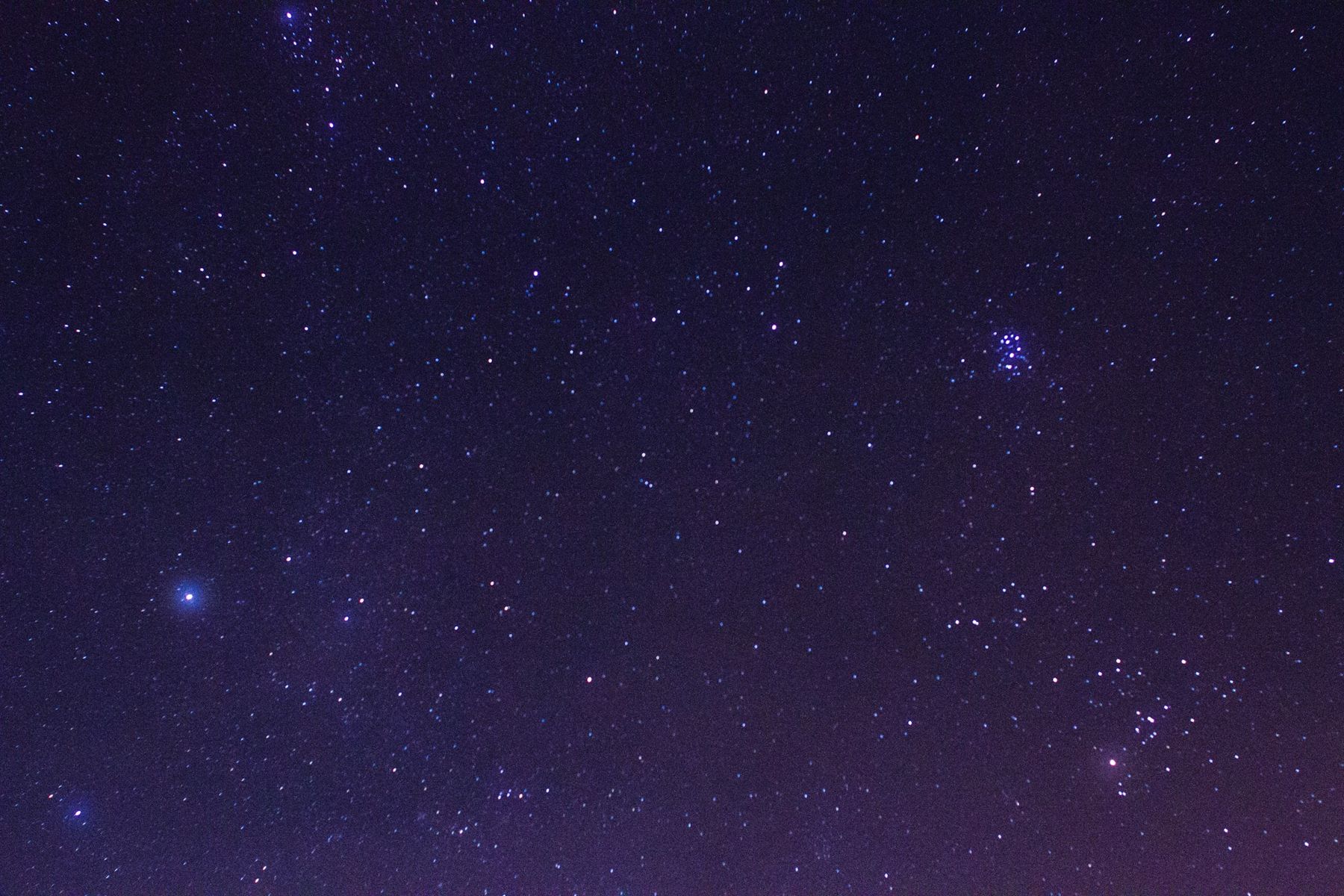
Get twenty miles from the nearest town in western Kansas and the sky fills with more stars than most people ever see, from horizon to horizon with nothing in the way.
Pick your spot in daylight. Never stop on a road at night; use a public pull-off. Gravel goes slick with dew, deer cross at dusk, and signal is thin.
The plains sky is famous by day for its size. At night it does something more. With no mountains or forest to cut off the horizon, the whole dome is open, and in the thinly settled west of the state the darkness can be deep enough that the Milky Way casts a faint glow over the ground. You do not need a telescope. You need a clear night, a dark place and some patience.
Finding the dark
Light pollution in Kansas follows the population. The eastern third of the state, around Kansas City, Topeka, Lawrence and Wichita, glows on the horizon from a long way off. West of about the middle of the state, towns get smaller and farther apart, and the sky darkens quickly. In the far west and southwest, the darkest skies are as good as any in the central part of the country.
Even out there, you will see light domes. Every town makes one, and so do large feedlots, processing plants and some oil field sites. Wind farms add slow-blinking red aircraft warning lights across whole sections of the horizon. The trick is to put distance between you and all of them, and to face away from the nearest glow.
Public places make the best viewing sites: state parks and fishing lakes, the Cimarron National Grassland in the southwest corner, and the canyon at Lake Scott, where the bluffs block town lights. Hours and overnight rules vary from place to place, so check before you go. Avoid private land, gated roads and field entrances.
Timing the moon and the weather
The moon matters more than anything else you control. A full moon washes out all but the brightest stars. For the deepest sky, go in the week around the new moon, or wait until a waning moon has set or a waxing moon has not yet risen.
Weather on the plains changes fast. Humid summer nights carry haze that dims the horizon, and thunderstorms can build in the evening even on days that started clear; the guide to storm season covers the warning signs. The crispest skies often follow a cold front in autumn and winter, when dry northern air clears the haze. Wind is common and makes cold nights colder.
What each season shows
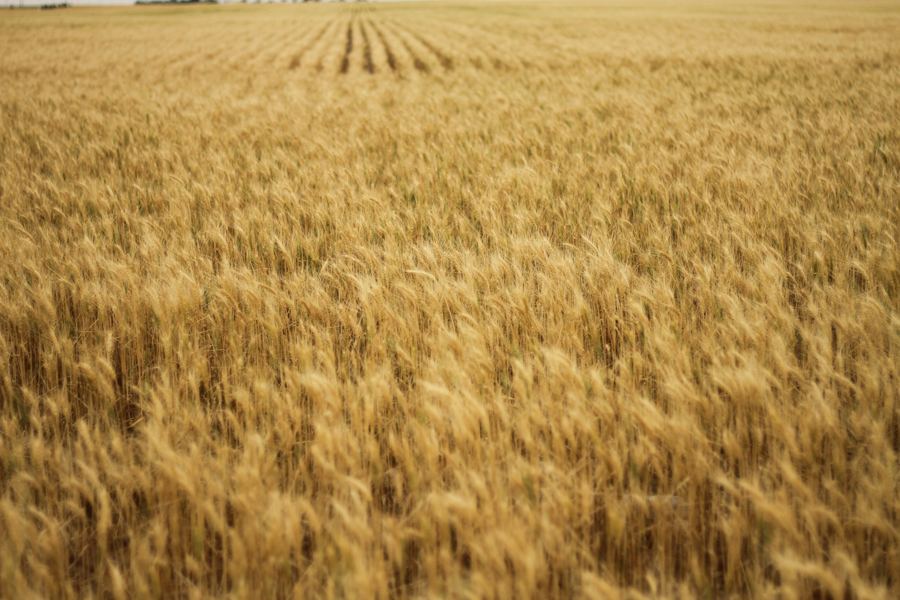 Turn off hereWheat harvest in June
- Summer: the brightest part of the Milky Way, toward the center of the galaxy, stands over the southern horizon in Sagittarius and Scorpius. The Summer Triangle of Vega, Deneb and Altair rides high overhead. The Perseid meteor shower peaks in mid-August.
- Autumn: the Milky Way swings to the west in the evening, the Andromeda Galaxy is visible as a faint smudge to the naked eye under dark skies, and the nights lengthen and cool.
- Winter: Orion, Taurus and the Pleiades dominate, with the brightest stars of the year around them. The Geminid meteor shower peaks in mid-December, often the strongest shower of the year.
- Spring: the Big Dipper climbs high in the north, the galaxies of Leo and Virgo lie in a darker part of the sky, and in the darkest places a faint cone of zodiacal light rises in the west after twilight.
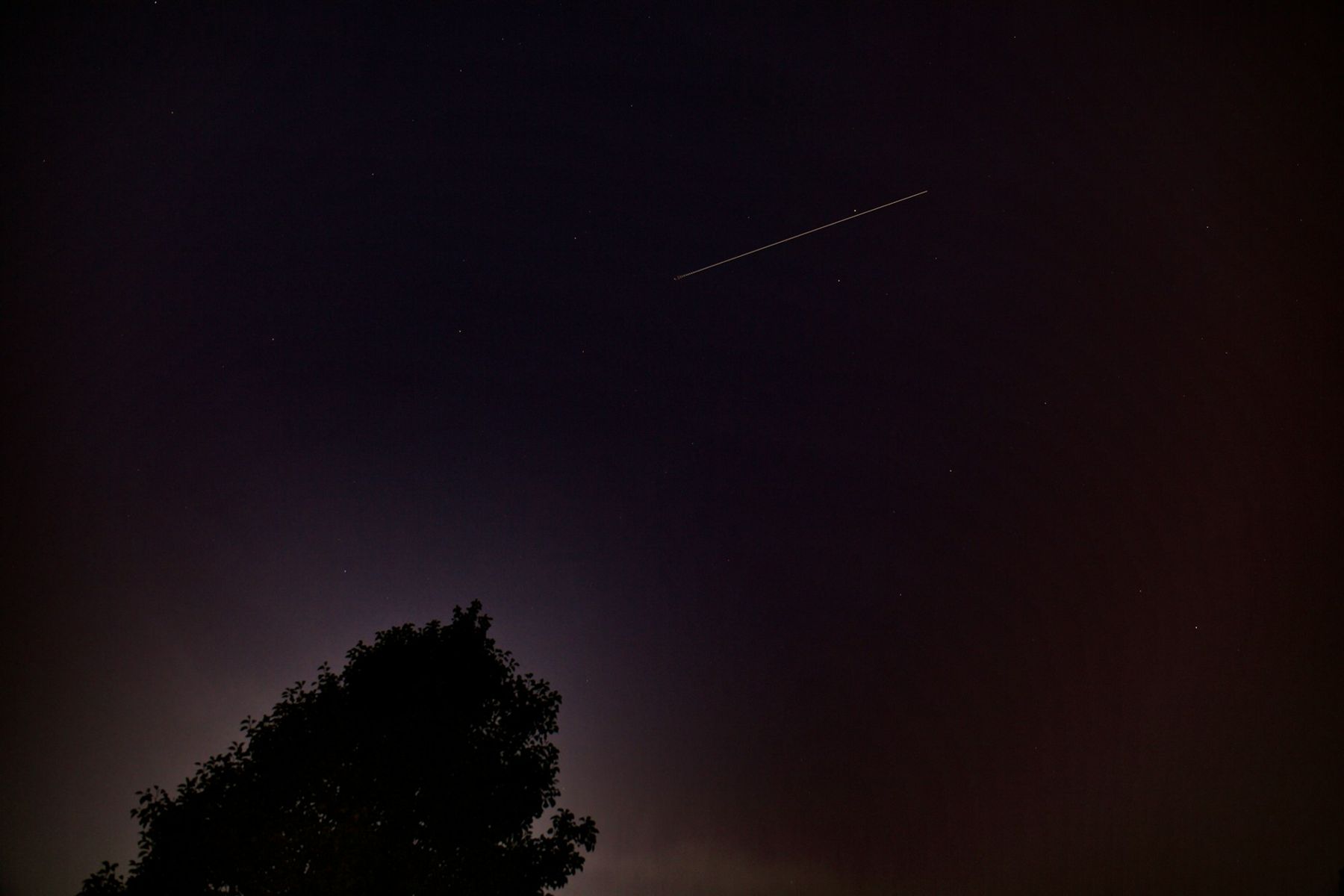
Satellites cross the sky every few minutes in the first hours after dark, steady points moving in straight lines. Planets shine without twinkling and move slowly through the zodiac constellations over the months, so a current star chart or almanac helps you tell them apart.
Seeing well
Your eyes need twenty to thirty minutes in darkness to adapt fully, and a single glance at a white light or a bright phone screen resets much of that. Use a red flashlight, turn your phone's brightness to the minimum, and keep car headlights off while others are watching.
- Arrive before full dark so you can see your footing and the lay of the land.
- Set up a chair or blanket; looking straight up for long is hard on the neck.
- Start with the brightest stars and constellations, then work toward fainter ones.
- Use averted vision for faint objects: look slightly to one side and they appear.
- Binoculars show star clusters, the moon's craters and the structure of the Milky Way.
Staying safe and comfortable
Plains nights get cold even in summer once the wind picks up, and winter nights can be bitter. Bring more layers than you think you need, and something warm to drink. In summer, chiggers, ticks and mosquitoes are out in the grass; repellent and long trousers help.
Do not stop on the road itself or on a narrow shoulder. A section-line road may see only a few cars a night, but those cars are moving fast and not expecting you. Use a pull-off or a public parking area well off the road, and let someone know where you are going. Read driving the back roads before heading out on gravel after dark, when dew and loose rock make it slicker than it looks by day.
The sky the settlers saw
For most of human history everyone saw a sky like this. Travellers on the Santa Fe Trail, the tribes who hunted these plains, the families in sod houses on their first claims: all of them lived under it every night. Today, most people in the country cannot see the Milky Way from home. Western Kansas is one of the places where that sky is still close, and on a clear, moonless night, with the wind down and the whole horizon open, you can stand under it the way people here always have.
Camera work
- Heyzeus EscriboUnsplash License
- Matt PeppesUnsplash License