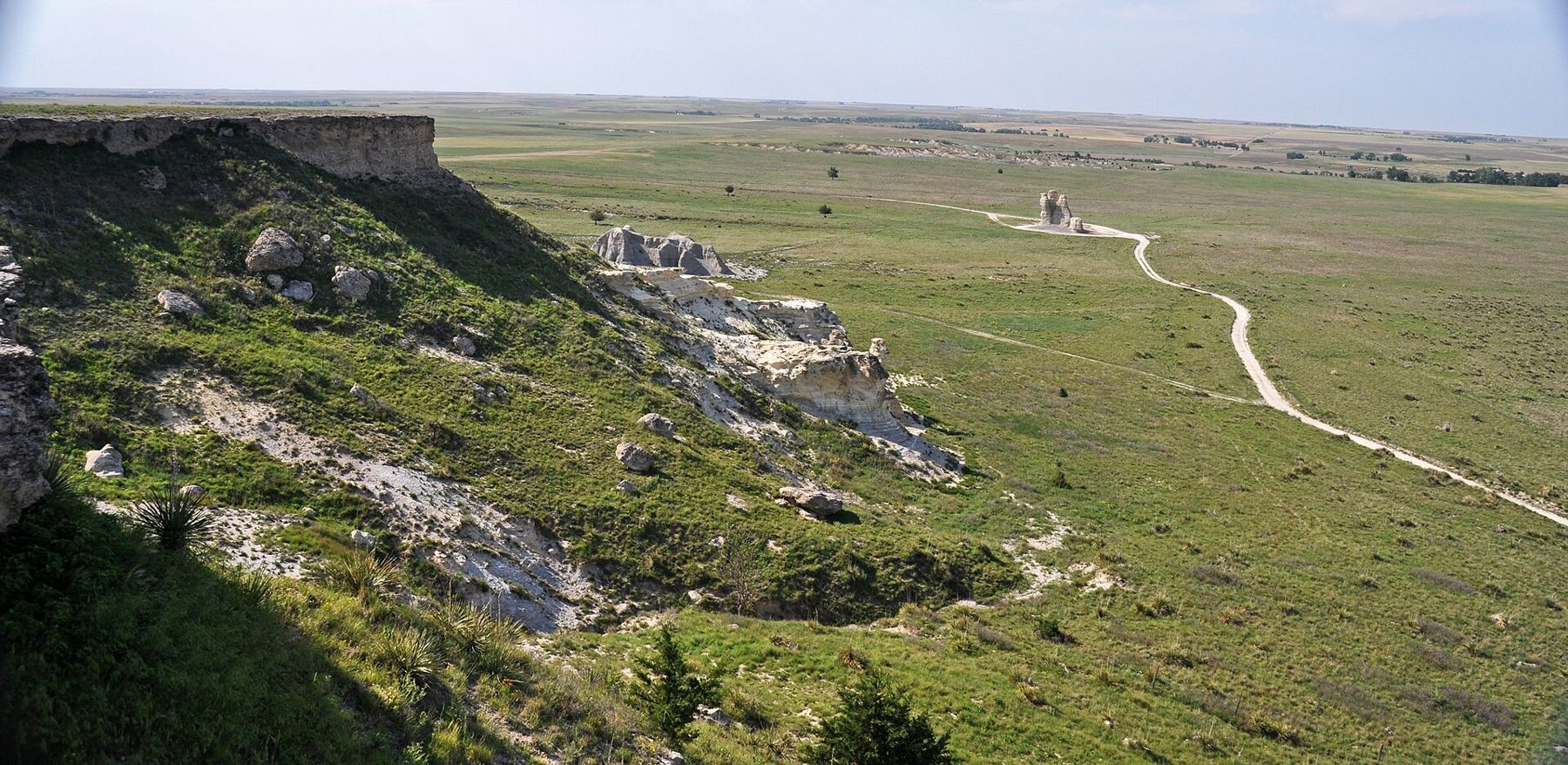
Most of rural Kansas is reached by gravel roads laid out on a one-mile grid. They are quiet and open, and they ask for a few skills the highway never does.
Fill up whenever the gauge reaches half. Avoid dirt roads after rain, slow for loose gravel and blind hilltops, and expect long stretches with no cell signal.
Leave the highway in rural Kansas and you are almost always on a road that runs exactly north and south or east and west. Every mile there is another crossroad. The surface turns to gravel, the traffic thins to a pickup every few minutes, and the land opens on both sides. These are the section-line roads, and they reach almost every farm, pasture and creek in the state.
The survey grid
Kansas was surveyed under the federal Public Land Survey System before most of it was settled. Surveyors divided the land into townships six miles square, and each township into thirty-six sections of one square mile, 640 acres. Roads were laid along many of the section lines, which is why rural Kansas is a grid of roads one mile apart.
Because the earth is curved, a perfect square grid cannot be kept up across long distances. Surveyors corrected it every so often, along lines called standard parallels. Where a road meets one of these correction lines, it often jogs sideways for a short distance before continuing. When a straight road suddenly makes two sharp turns for no clear reason, you have probably found one.
Many counties number or letter their roads on the grid, which makes them easy to navigate once you understand the system. A paper county map, available from many county offices, shows every road and its surface.
Gravel, dirt and mud
Most of the grid is gravel. Gravel roads are fine in dry weather at moderate speed, but they have their own rules.
- Loose gravel piles up in ridges along the edges and the center. Hitting a ridge at speed can pull the car sideways. Slow down and steer gently.
- Washboard ripples shake the car hard on curves and hills. Slower is smoother.
- Braking distances are longer than on pavement, especially downhill.
- Hilltops hide oncoming traffic, and many drivers use the middle of the road. Keep right at every crest.
- Dust from another car can hide a third vehicle behind it.
Dirt roads are another matter. Some roads are unsurfaced, and some counties mark them as minimum maintenance roads, travelled at your own risk. After rain, these turn to deep, greasy mud that can stop any car. If a road looks dark and wet, do not go down it. In the Flint Hills the problem is rock and creek crossings; in the red country around the Gypsum Hills, wet red clay is notoriously slick.
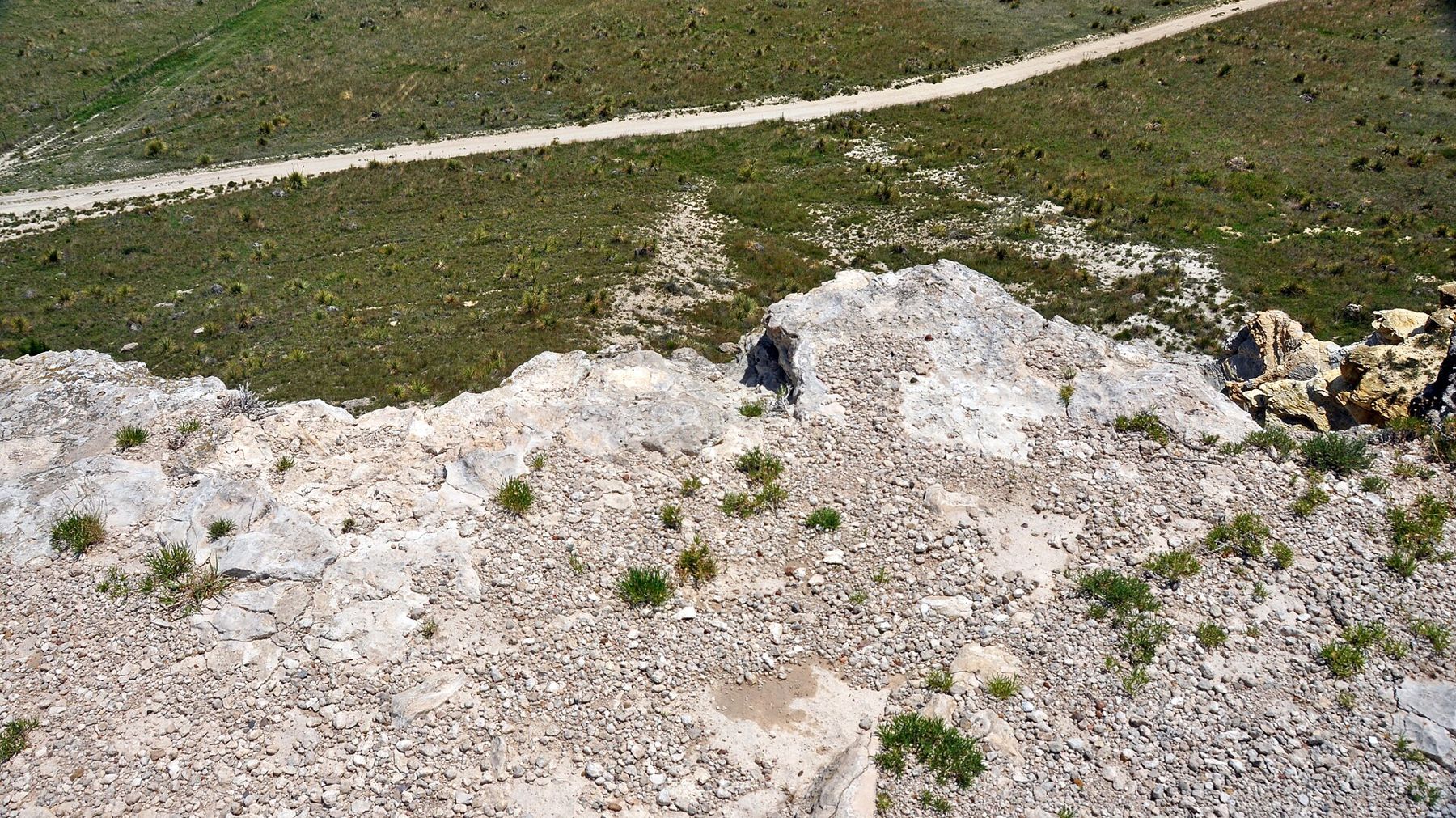
Intersections and traffic
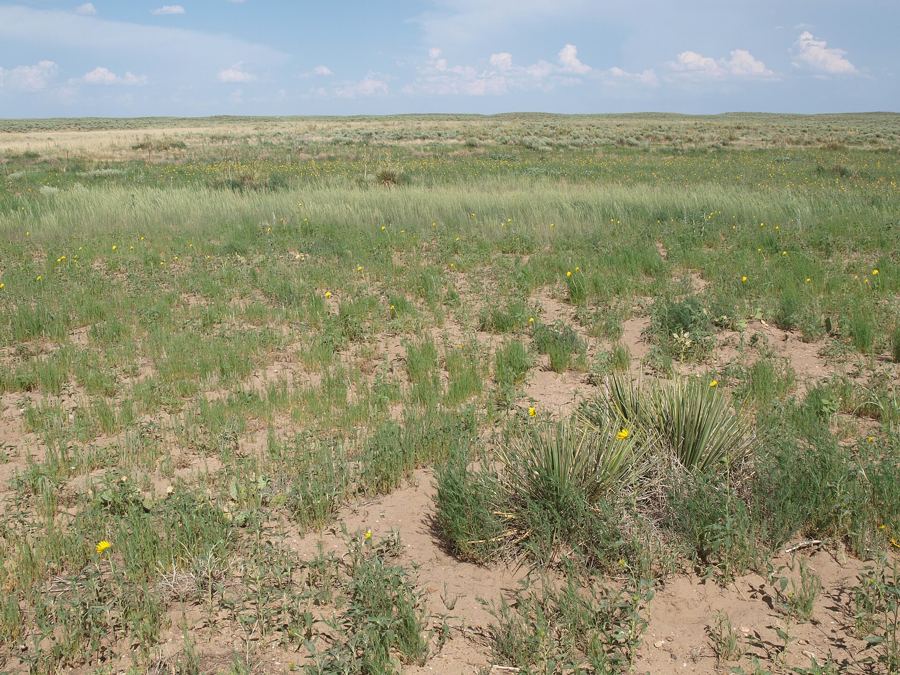 Turn off hereThe Cimarron National Grassland
Many rural intersections have no stop or yield signs. Slow down at every crossroad, look both ways, and be ready to yield. Tall crops in summer can hide a vehicle coming from the side until the last moment.
Farm machinery uses these roads, sometimes taking the whole width. During wheat harvest in June and July, expect combines, grain carts and loaded trucks; slow down and give them room. School buses run on gravel roads too, and they stop often.
Local drivers often lift a finger or a hand from the steering wheel as they pass. Returning the wave is good manners.
Cattle guards, gates and livestock
In ranch country, roads cross pastures. A cattle guard is a grid of pipes or rails set over a pit across the road, which cattle will not walk over but cars can cross. Slow down before crossing; some are rough or have a raised lip. Where there is a gate instead of a cattle guard, leave it as you found it, open or closed.
Cattle may be on the road in open range country and where fences are down. Slow down and let them move; honking usually makes them scatter unpredictably. Deer are common at dawn and dusk, and on the plains they cross in groups. Pheasants and quail burst up from the ditches.
Fuel, signal and distance
In western Kansas, towns can be twenty or thirty miles apart, and not every small town has fuel. Stations in small towns may close early or accept only cards at the pump after hours. Fill the tank whenever it reaches half.
Cell signal is good along the interstates and in towns, but it can vanish for long stretches in between, especially in river valleys and the hill country. Download offline maps before you go, and carry a paper map too. Tell someone your route if you are heading somewhere remote, such as the chalk country around Castle Rock.
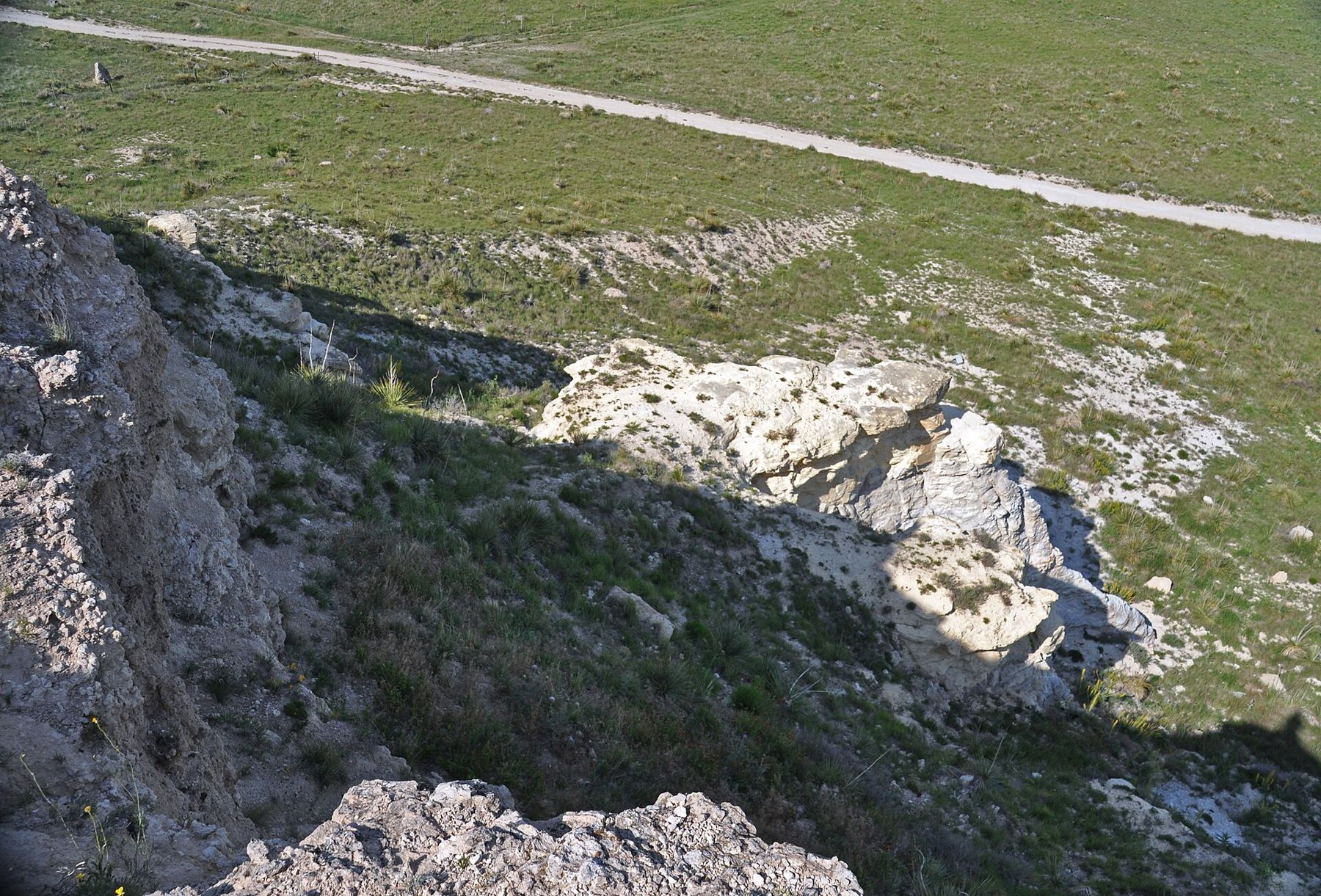
Carry water, a spare tire you have checked, and a way to call for help. In winter, add blankets and a shovel; blowing snow can close roads quickly on the open plains.
Weather and the road
The weather on the plains decides which roads you can use. Rain turns dirt roads to mud. Spring thunderstorms bring hail, lightning and flash floods; never drive into water over the road, and read the guide to storm season before travelling in spring. In summer, dust and heat; in winter, ice and blowing snow.
Why it is worth it
The back roads are where you see the real country: old stone farmhouses, one-room schoolhouses, creek crossings lined with cottonwoods, pastures with no fence in sight, elevators rising from towns you would never find on the highway. Drive slowly, keep your eyes open, and the grid will take you almost anywhere.
Camera work
- James St. JohnCC BY 2.0