An 1880s limestone ranch, a free-ranging bison herd and miles of walking trail through grass that has never been plowed, on the Flint Hills byway near Strong City.
The visitor center sits right on K-177. Trails beyond it are rough and unshaded. Fuel and food are in Strong City and Cottonwood Falls, a few miles south.
A ranch in the grass
Tallgrass Prairie National Preserve protects close to eleven thousand acres of Flint Hills range in Chase County. Congress created it in 1996 to save a piece of the tallgrass prairie, the grassland that once ran from Texas into Canada and is now reduced to a small fraction of its old extent. It is an unusual park. Most of the land is owned by a private conservation group, and the National Park Service manages it together with that partner.
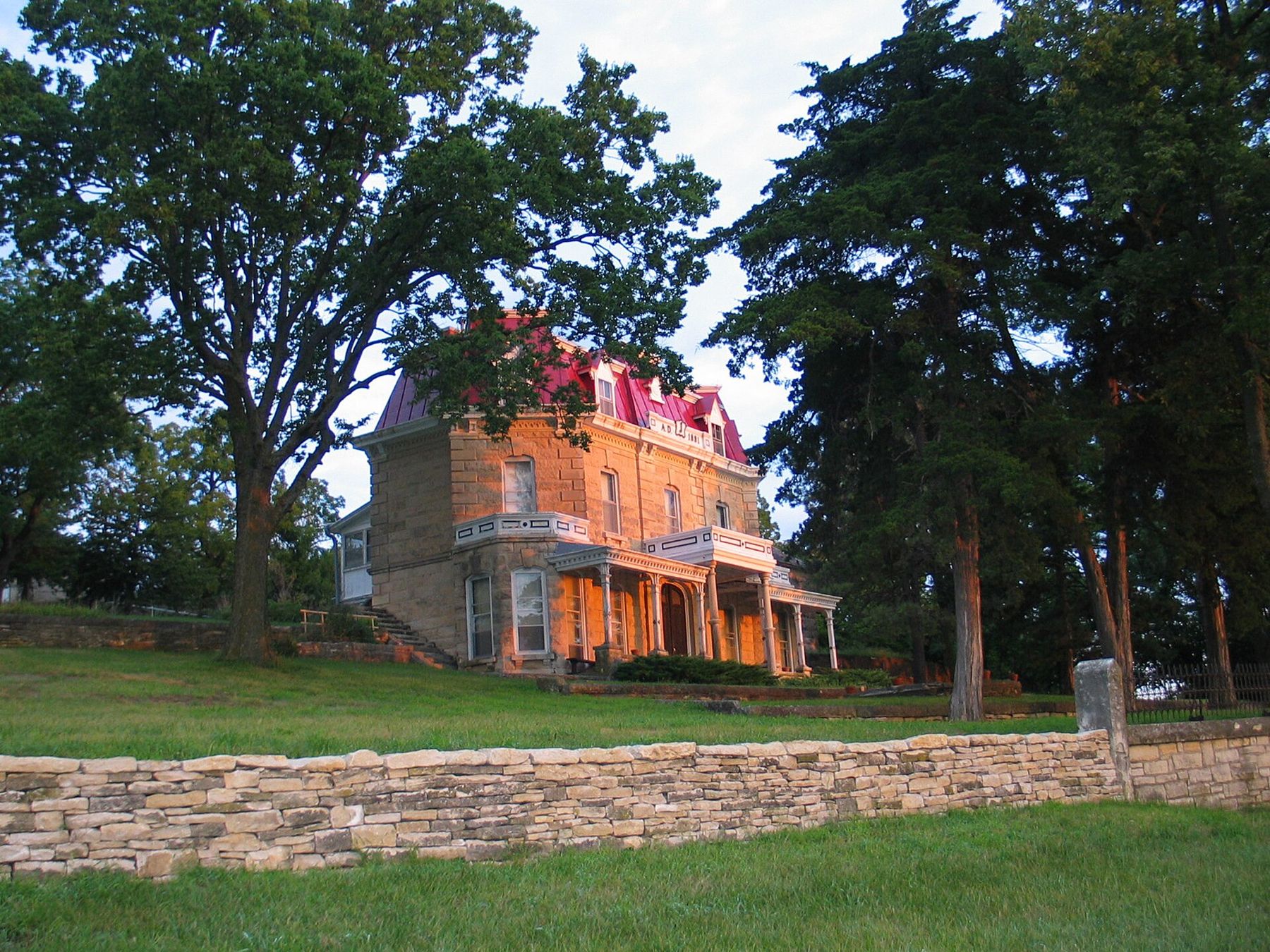
The preserve sits beside K-177 on the Flint Hills Scenic Byway, a couple of miles north of Strong City. From the road you see a cluster of stone buildings below a long ridge. That is the old Spring Hill Ranch, and it is where every visit starts.
The house and the barn
Stephen F. Jones, a cattleman who had made money in Colorado and Texas, bought the land in the late 1870s and built the ranch headquarters in 1881. He built to last, using the local limestone. The house is three stories tall in the Second Empire style, with a mansard roof, a stone wall around the yard, and room for a family that wanted to be seen as more than ranchers on the frontier.
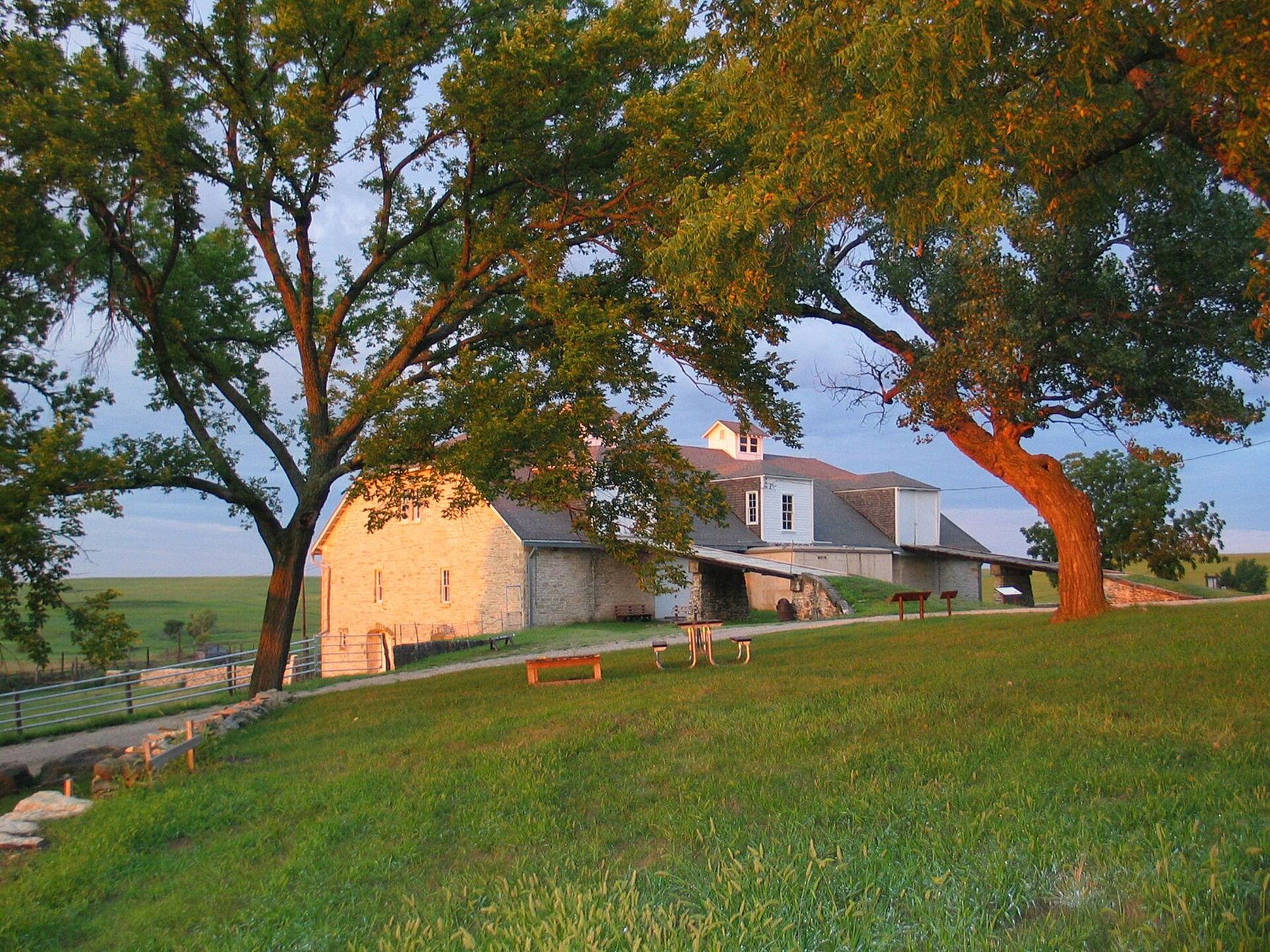
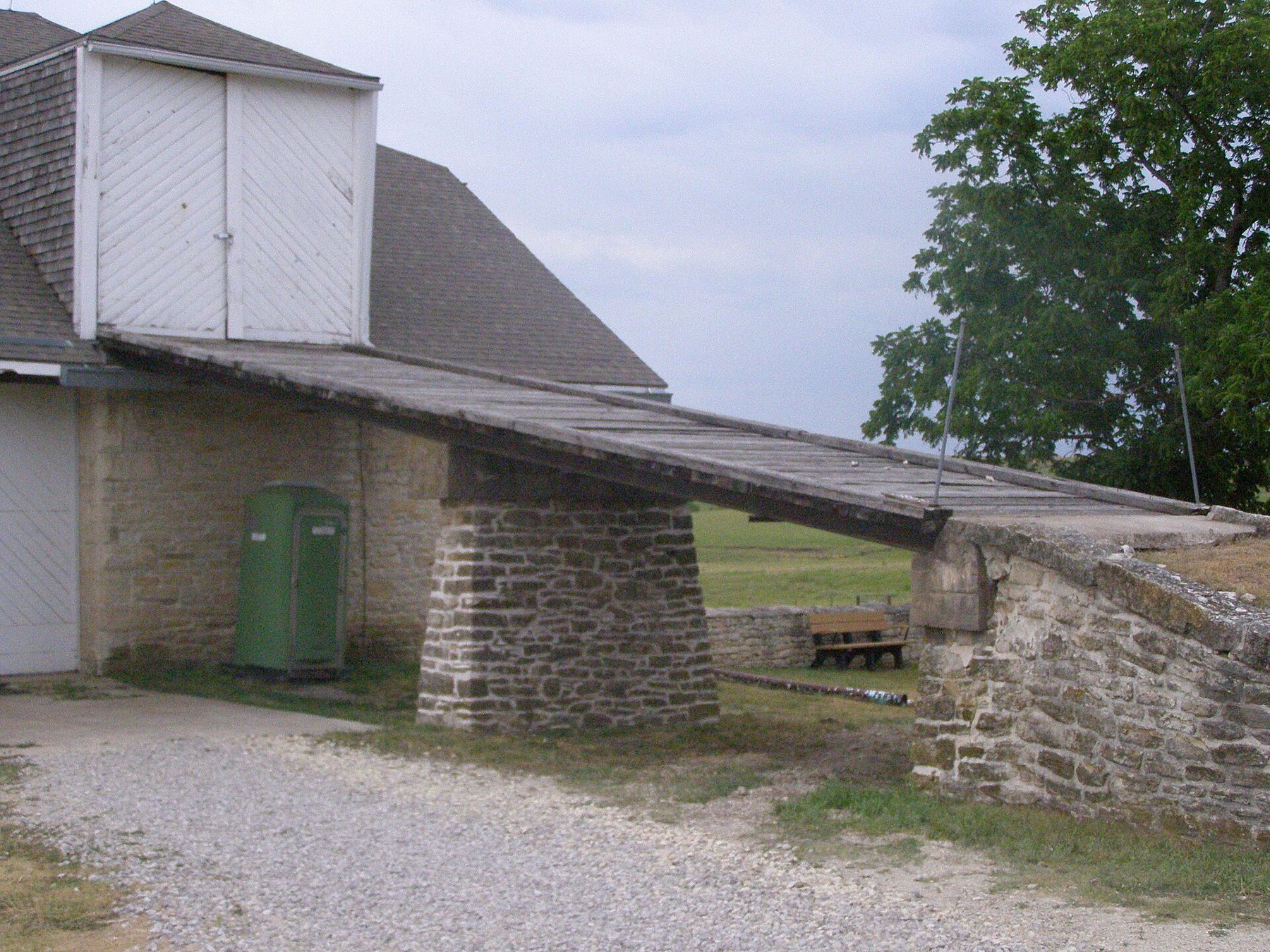
The barn stands just below. It is built into the slope so that wagons could enter its upper floors from the hillside, with livestock housed at the lower level. Walk around it and you can see the three working levels and the north ramp that led to the top. The stonework is fine, laid by masons who knew the local rock well.
Ranger-led tours of the house run at set times through much of the year, and the ground floor rooms are often open to walk through. Schedules change with the seasons and with staffing, so check before you go if seeing the inside matters to you.
Up the hill to the north, reached by a trail or a short drive, stands the Lower Fox Creek School, a one-room limestone schoolhouse from 1882. It served ranch families into the twentieth century and gives a plain picture of what childhood out here looked like.
Jones sold the ranch within a few years, and it passed through other owners and generations of ordinary cattle work before the preserve was created. That long working life is part of why the buildings survived in such good order: they never stopped being used, and nobody had reason to pull them down.
The bison
Bison returned to the preserve in 2009, when a small herd was brought in from Wind Cave National Park in South Dakota. The herd has grown since and ranges over a large fenced pasture in the hills north of the ranch. Some days they graze near a trail; other days they are out of sight beyond a ridge, and you will not see them at all.
Bison are wild animals, heavy, fast and unpredictable, and they injure people in parks every year. Keep a wide distance, at least the length of a couple of football fields if you can. Never walk toward them for a photograph, and back away if one changes what it is doing because of you. Bulls in the summer rut and cows with young calves in spring are the most dangerous. If a herd stands on the trail, go around it widely or turn back.
For a closer look at bison on another range, a refuge in McPherson County keeps its own herd, along with elk. The Tallgrass herd, though, lives on the kind of grass the animals grazed for thousands of years before the plow, and seeing them on these hills is worth the walk.
Walking the prairie
The preserve has dozens of miles of trails and mowed routes. Short loops near the ranch suit anyone. Longer trails climb into the hills and into the bison pasture, where you walk through open grass with no shade and little to mark the way but the line of the trail and the ridges ahead.
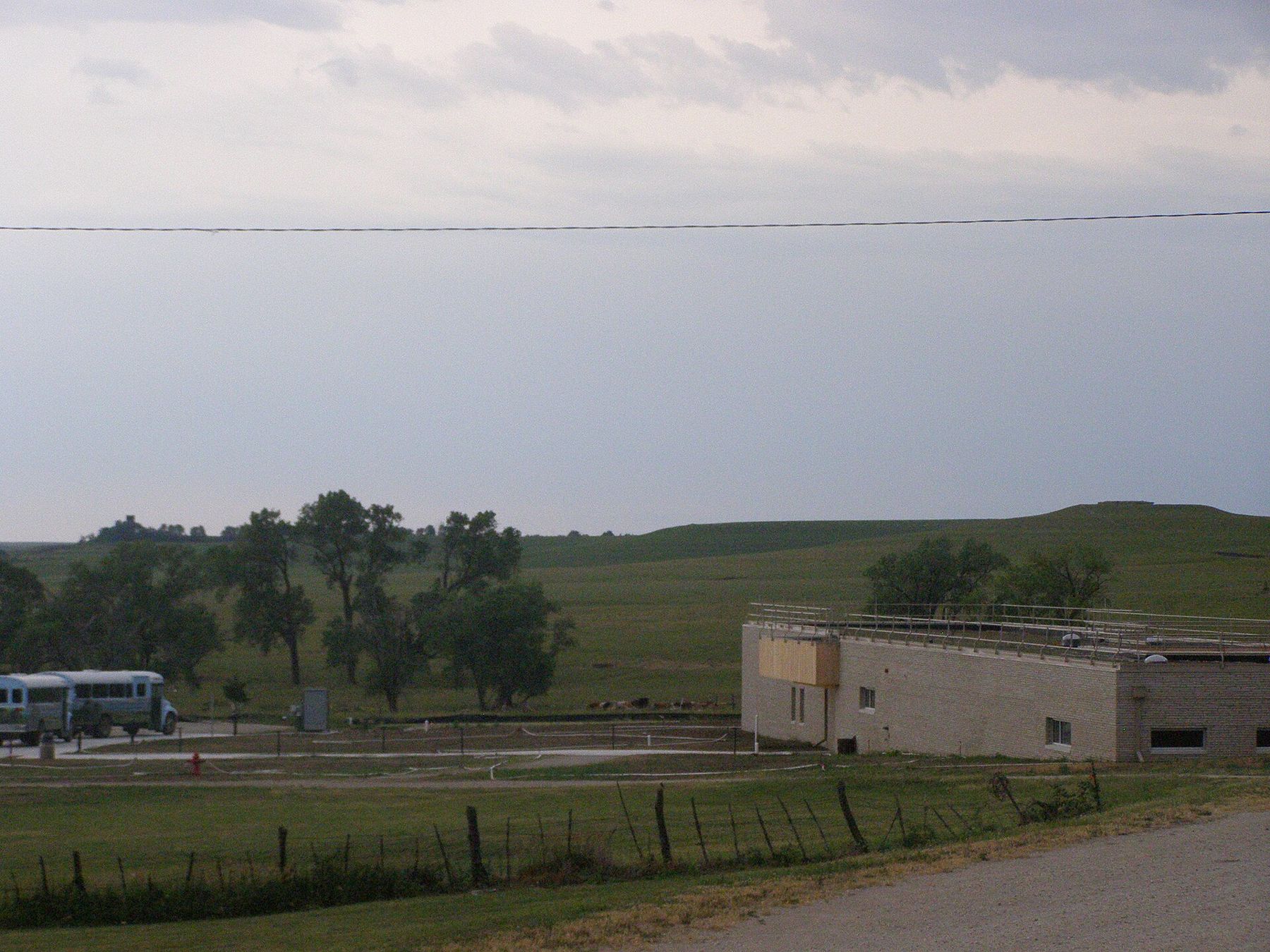
The grass is at its tallest in late summer and early fall, when big bluestem and Indiangrass can reach over your head in the low places. Spring brings green after the burns, and wildflowers come in waves from April to October. On a still morning you hear meadowlarks, dickcissels and the wind in the grass, and not much else.
Not every large animal you see is a bison. Cattle still graze parts of the preserve under lease, as cattle have grazed these hills for well over a century, and pastures are burned on a rotation so that some ground is freshly black, some new and green, and some old and tall. The mix is deliberate. Grassland birds, insects and small animals each need different kinds of cover, and fire and grazing together keep the open prairie from closing in with brush and cedar.
A few points of sense on the trails:
- Carry more water than you think you need. Summer heat on the open hills is hard, and there is almost no shade.
- Ticks are common from spring through fall. Check yourself after every walk.
- Thunderstorms build fast in the afternoon. If you hear thunder, head down off the ridges and back toward shelter. Follow official warnings and never wait out lightning on high ground.
- Parts of the preserve are burned each spring. Trails can close during a burn; check at the visitor center.
- Gates in the bison pasture must be left as you find them.
On a still morning you hear meadowlarks, dickcissels and the wind in the grass, and not much else.
Making a day of it
Start at the visitor center for maps, trail news and the bus tour schedule. Its exhibits cover the plants, animals and fire of the prairie, and it has restrooms and drinking water, which you will not find out on the trails. In the warm months, guided bus tours often run out into the pasture, which is the easiest way to see the open prairie and sometimes the bison without a long walk. Tour times and seasons change, so ask on arrival or check ahead.
Spend the morning at the ranch house and barn, walk a trail before the heat builds, and drive the few miles south to Cottonwood Falls for its old courthouse. If you have more time, carry on down the byway to the empty country south toward Cassoday, or set out west for the wetlands at Cheyenne Bottoms and Quivira, where the birds take over from the grass. Light is best early and late, when the low sun picks out every fold of the hills.
Camera work
- NPS PhotoPublic domain
- Chris LightCC BY-SA 4.0