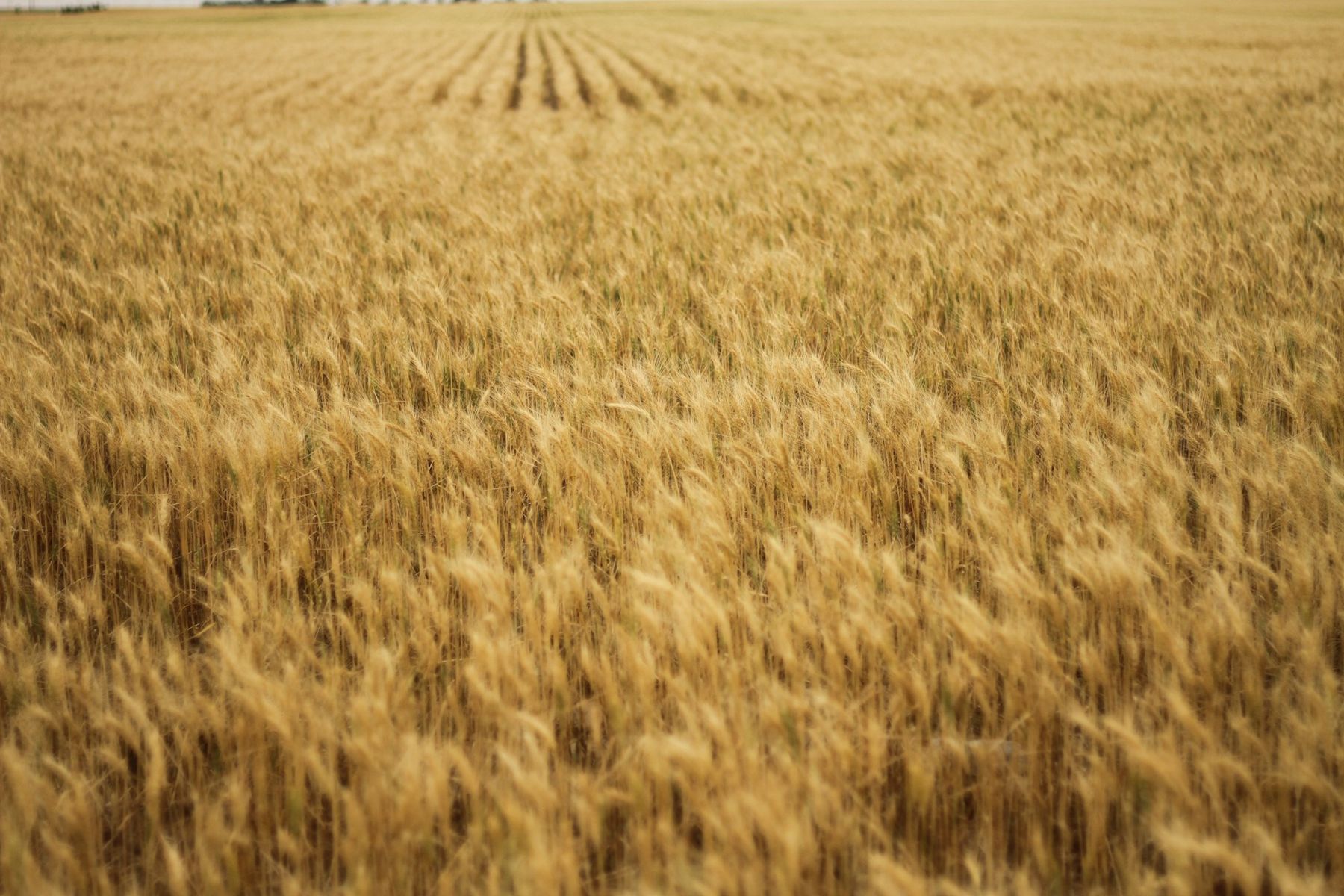
For a few weeks each summer, the whole of central and western Kansas runs on one job: getting the winter wheat cut and hauled before hail, rain or fire can take it.
Expect wide combines on trailers, grain trucks turning into fields, and dust on gravel. Slow down, pass only with a clear view, and never park on dry stubble.
Drive across central Kansas in the middle of June and the color of the country has changed. The green fields of May have turned gold, the air smells of straw and dust, and across the section lines you can see combines working in a row, each trailing a pale cloud. Trucks run from the fields to the elevators all day and into the night. This is wheat harvest, and for a few weeks it shapes everything else.
A crop planted in the fall
Most of the wheat grown in Kansas is hard red winter wheat. It is planted in September and October, sprouts before winter, and lies low and green through the cold months. In spring it grows quickly, heads out in May, and ripens as the weather heats up. By June the stalks have dried to gold and the kernels have hardened. The flour milled from it goes mostly into bread.
Harvest begins in the south of the state, often in the middle of June, and moves north as the grain ripens, with the northern counties usually finishing in July. Timing changes every year with the weather: a hot, dry spring brings it early, a cool, wet one pushes it later.
How the cutting works
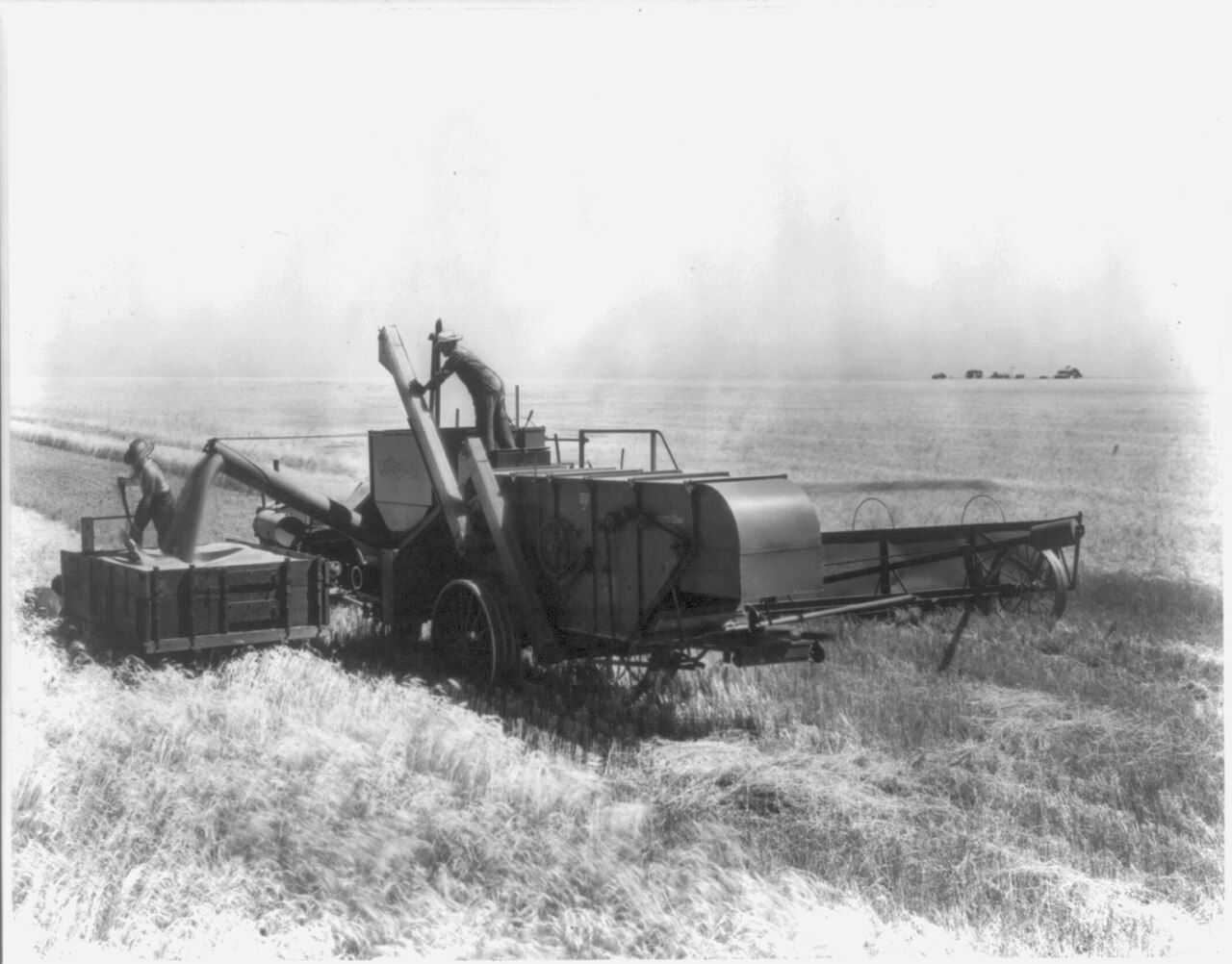
A combine does three jobs at once, which is how it got its name: it cuts the stalks, threshes the grain loose from the heads, and separates the kernels from the chaff and straw. The cutting head at the front can be thirty feet wide or more. Behind the machine, chopped straw spreads back across the field.
When the combine's tank is full, a tractor pulling a grain cart drives alongside and takes the load without stopping the cutting. The cart empties into semi-trucks waiting at the field edge, and the trucks haul to the local elevator, where the wheat is weighed, tested and stored. The story of what happens there is in the guide to grain elevators.
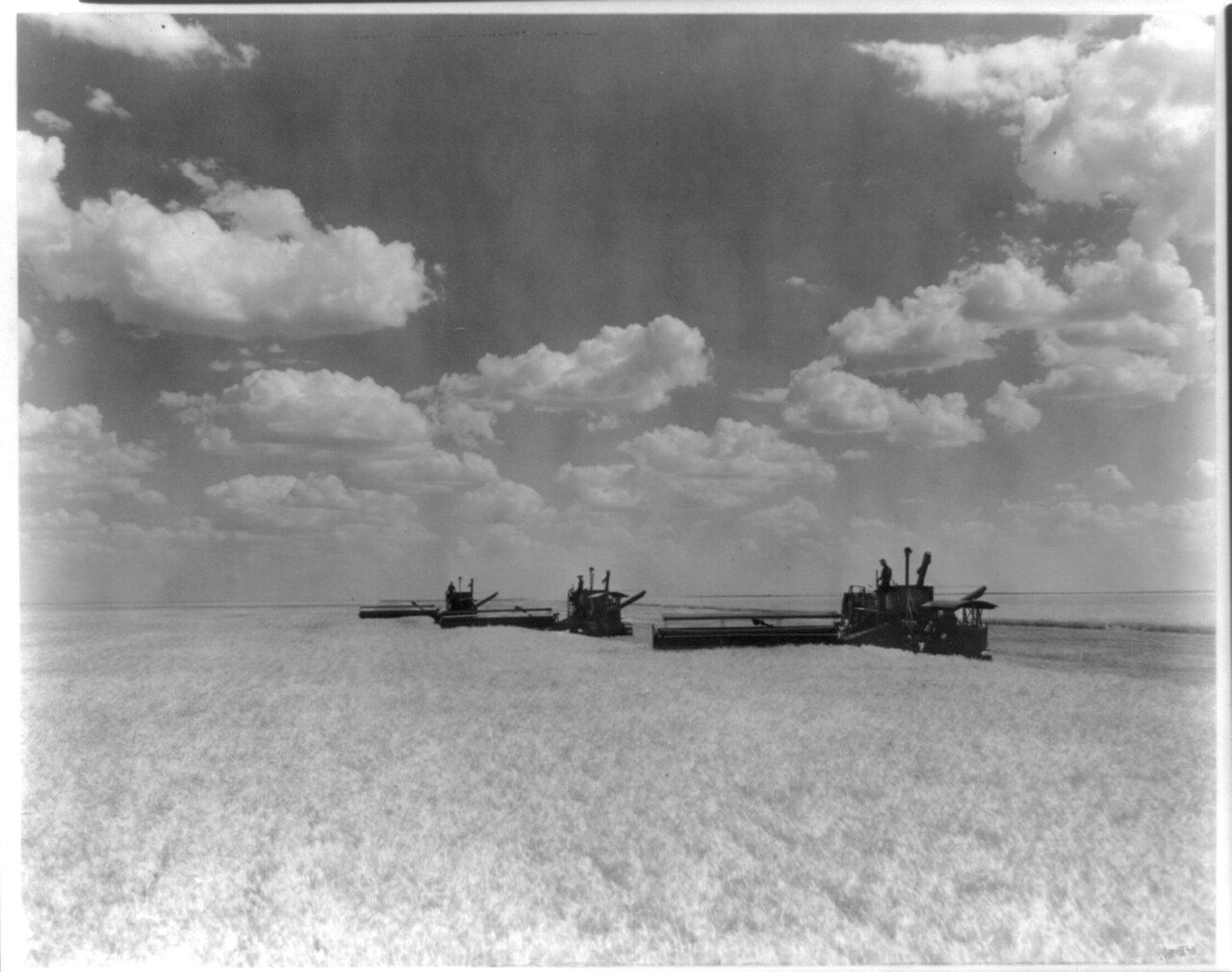
Crews wait for the morning dew to dry before they start, because damp grain does not store well. Once the wheat is dry, they often cut long past dark under the lights, stopping only when the evening dew comes back or the machines need repair.
Custom cutters
 Turn off hereBig sky at night
Many Kansas farmers cut their own wheat. Many others hire custom harvesters, crews that own combines, carts and trucks and work their way north with the ripening crop. A typical crew starts in Texas or Oklahoma in late spring, moves through Kansas in June and July, and continues into Nebraska, the Dakotas, Montana and sometimes Canada by late summer. Some crews are family businesses that have followed the same route for generations, coming back to the same farms every year.
The life is hard: long days, nights in small towns, breakdowns in the field, and weather that can stop work for days. It is also one of the old, steady rhythms of the plains, and in many wheat towns the arrival of the crews marks the start of summer as surely as the calendar does.
Weather, hail and fire
A wheat crop is at its most valuable, and most exposed, in the days just before harvest. A single hailstorm can strip the heads and flatten a field in minutes, and the guide to storm season covers the weather that brings it. Heavy rain at harvest time delays cutting and can damage the grain. Drought, as in many recent years, cuts the yield long before the combines arrive.
Fire is the other risk. Dry wheat and stubble burn fast, and a hot exhaust, a spark from machinery or a careless match can set a field alight. Farmers keep water and disc harrows close by during harvest. Never park a car on dry grass or stubble, where a hot exhaust can start a fire, and never toss a cigarette from the window in harvest country.
Courtesy on the road
Harvest fills the back roads with farm traffic, and much of it is slow, wide and heavy.
- Combines move between fields on the road, often with their cutting heads towed behind on trailers. They may take up more than one lane.
- Slow-moving vehicles carry an orange triangle on the back. Slow down as soon as you see one.
- Pass only where you can see far ahead and the law allows it. Farm machinery may turn left into a field with little warning.
- Loaded trucks need a long distance to stop. Do not cut in front of them.
- On gravel roads, dust from trucks can hide oncoming traffic. Slow down and keep your lights on.
A friendly wave goes a long way. People in harvest are tired and working against the clock, and a patient driver is noticed. Read driving the back roads for more on gravel and section-line roads.
Seeing the harvest
You do not need to go anywhere special. Drive any county road in wheat country in late June and you will see crews at work. Pull fully off the road where it is safe, and watch from the car or the road edge. Do not drive into fields or onto field entrances; they are working areas, and the machines and trucks need the space. Never approach running machinery.
The light is best in the evening, when dust hangs gold behind the combines and the elevator in the next town catches the last sun. After dark, the lights of the machines move across the fields under the stars.
Within days the field is stubble, and then the farmer may plant a second crop, bale the straw or leave the stubble to hold the soil until fall. The elevators fill, the crews move north, and the country settles back into summer.
Camera work
- Heyzeus EscriboUnsplash License
- Miscellaneous Items in High Demand, PPOC, Library of CongressPublic domain