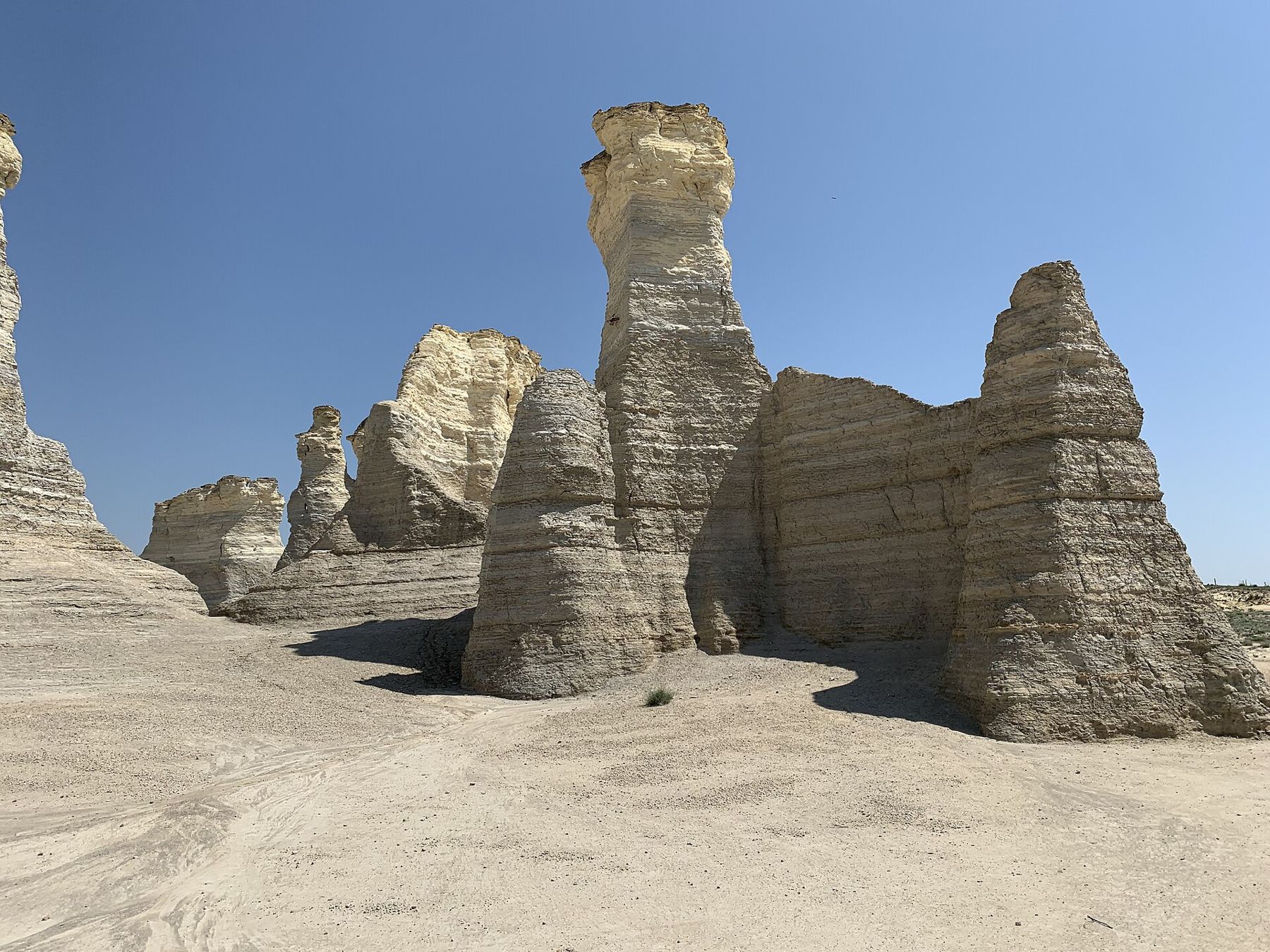
White chalk towers and arches stand alone on the shortgrass of western Kansas, the floor of a sea that dried up tens of millions of years ago. Visit gently: the land is private.
The last miles to the rocks are county gravel, slick and rutted after rain. Fuel in Oakley, Scott City or along I-70. Expect patchy cell signal and no services at the site.
A sea floor in the grass
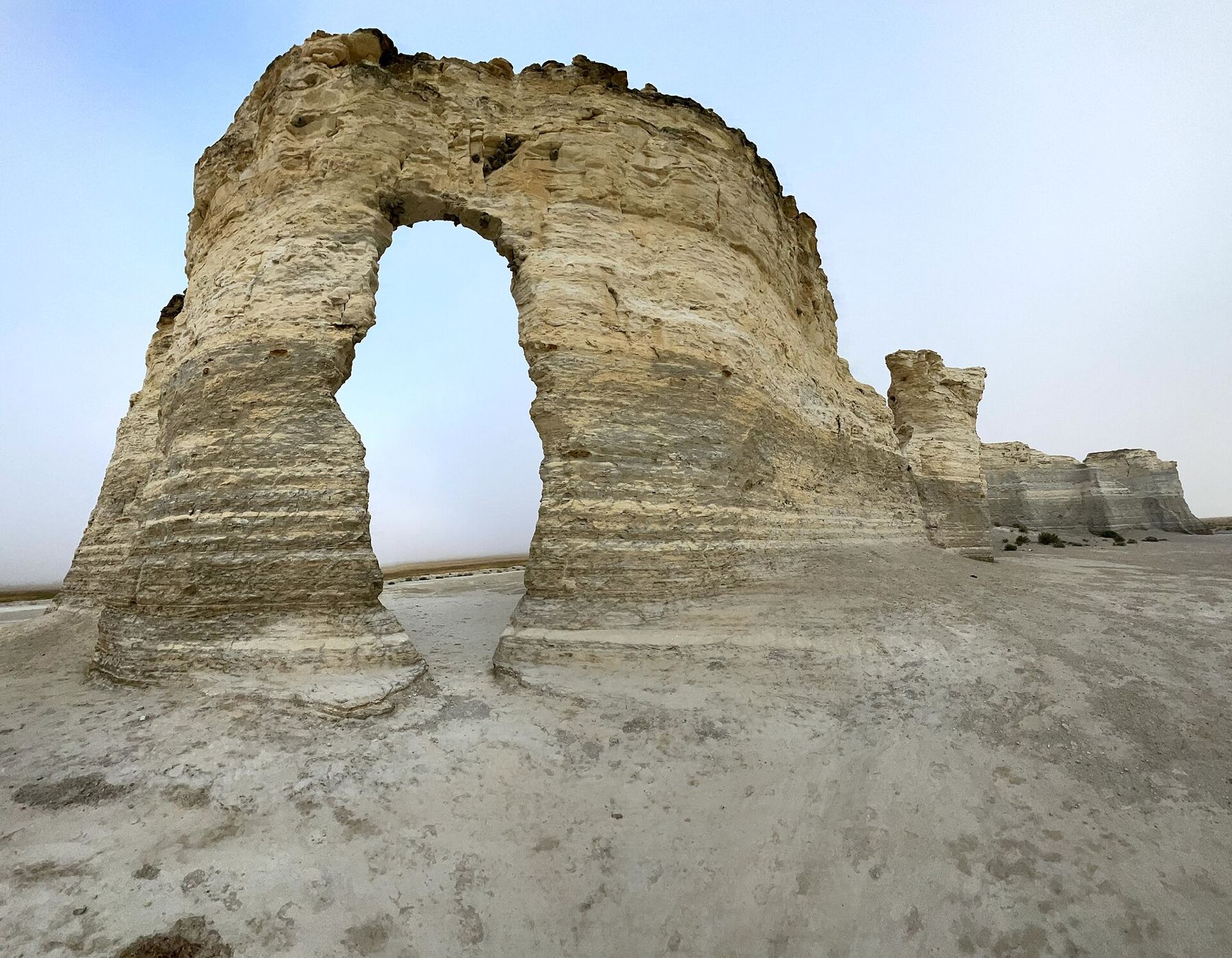
Drive south from Oakley on US-83 and the country is as flat and open as any in Kansas: wheat, grass, sky, a line of power poles. Then the road crests a low rise and, far off to the east, a row of pale towers stands up out of the plain like the ruins of a town. That is Monument Rocks, a cluster of chalk spires, buttresses and arches in Gove County, some of them about seventy feet high.
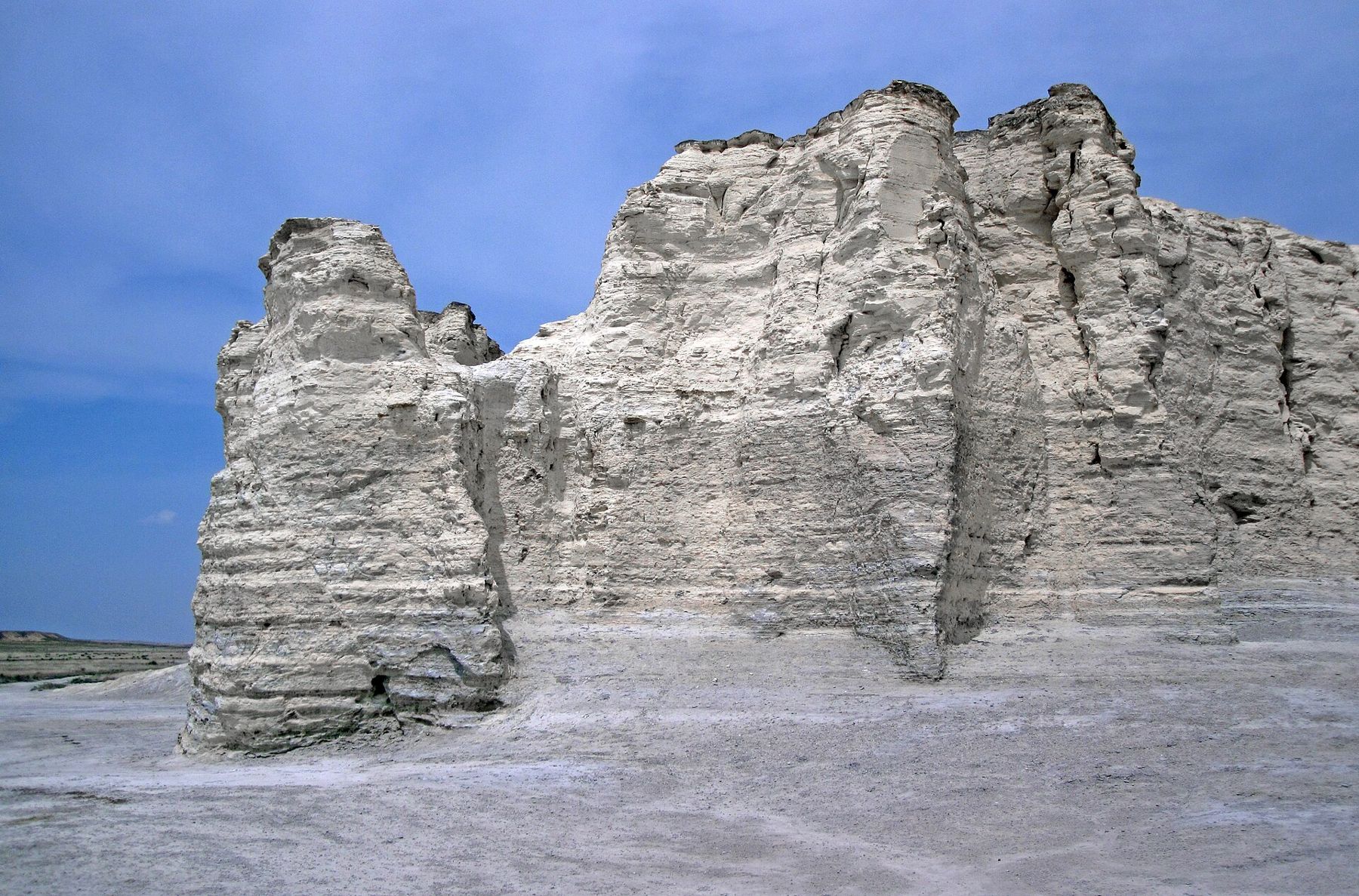
The chalk was laid down on the bottom of a shallow sea that covered the middle of North America in the late Cretaceous period, more than eighty million years ago. Geologists call it the Western Interior Seaway. Over a very long time, the shells of microscopic plankton settled on the sea floor, layer on layer, and hardened into the soft rock known as the Smoky Hill Chalk. When the sea withdrew and the land rose, the Smoky Hill River and its tributaries cut down through the chalk. What you see today is what wind, rain and frost have not yet carried away.
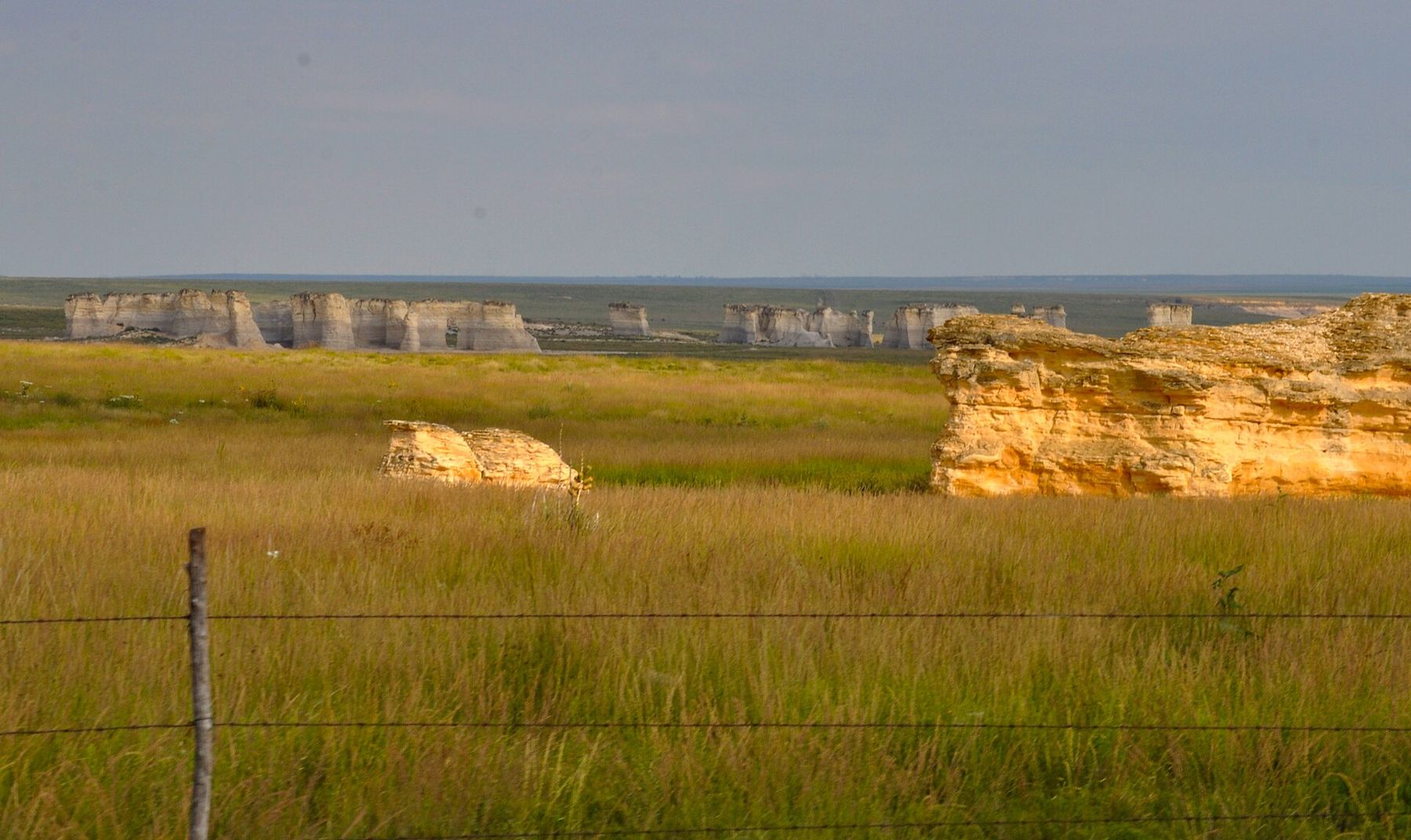
In 1968 Monument Rocks became the first National Natural Landmark chosen by the Department of the Interior. The designation recognizes the place; it does not make it a park.
People noticed the rocks long before that. In the 1860s a stage and freight route to Denver followed the Smoky Hill valley, and travelers on it used the white towers as a landmark on a plain with few others. A stage station named for the rocks stood near them for a short time. Nothing of it is left to see, but the route explains why the formations turn up in so many early accounts of crossing western Kansas.
The rocks are still changing. Every hard rain and every freeze and thaw loosens a little more chalk, and over a lifetime ledges drop, arches thin and spires lose their tops. The shapes you see now are a stage in a slow process, not a fixed monument.
Private land, open by goodwill
This is the most important thing to know before you go. Monument Rocks stands on private ranch land. The owners have allowed visitors for generations, and the gravel road runs right among the formations, but access is a courtesy that can be withdrawn. Read and follow the rules posted at the site. They commonly include:
- No climbing on the formations. The chalk is soft and breaks easily, and pieces fall without warning.
- No digging, carving or collecting of fossils or rock.
- No camping or fires, and no driving off the road.
- Leave gates as you find them and keep away from livestock.
Names scratched into the chalk last for decades and are the clearest sign of visitors who did not respect the place. Take photographs and leave the rock alone.
What the chalk holds
The Smoky Hill Chalk is one of the richest fossil beds of its age in the world. Over the past century and a half it has yielded the bones of mosasaurs, the great marine lizards of the seaway; long-necked plesiosaurs; large predatory fish; sharks; flying reptiles such as Pteranodon, with wings that spanned about twenty feet; and giant flat clams, some of them more than a yard across. One of the most famous fossils from Gove County, a big fish preserved with a smaller fish inside it, is on display at the Sternberg Museum of Natural History in Hays.
You will not find bones lying on the ground at the rocks, and you should not look for them; collecting on private land without permission is not allowed. Instead, look closely at the rock itself. The layers show as faint bands of white, cream and gray, and in places the chalk is stained orange and yellow by iron. The bands are seasons and centuries of sea floor stacked one on another.
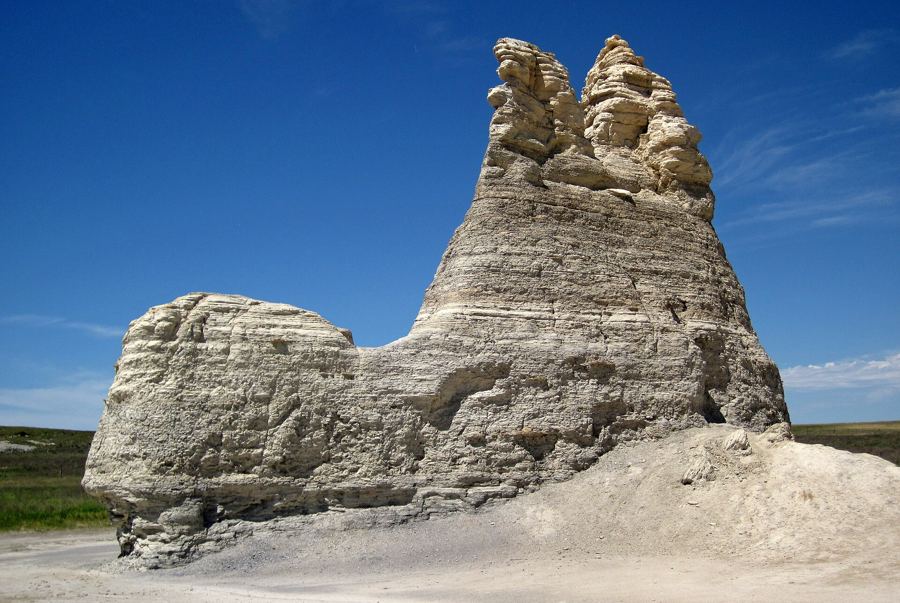 Turn off hereCastle Rock and the chalk badlands
Little Jerusalem Badlands
In the next county west, Logan County, the same chalk forms a different kind of landscape. Little Jerusalem Badlands State Park protects a long canyon of chalk walls, spires and hoodoos along a branch of the Smoky Hill. It opened in 2019 and is owned by a conservation group and managed by the state as a park.
Because the formations are so fragile, access works differently here. Two marked trails lead to overlooks along the rim, and walking into the badlands themselves is limited to guided visits or special permits. Check current trail access, permits and fees with the state park service before you go. The rim trails are short but exposed, with sharp drop-offs; keep to the marked paths.
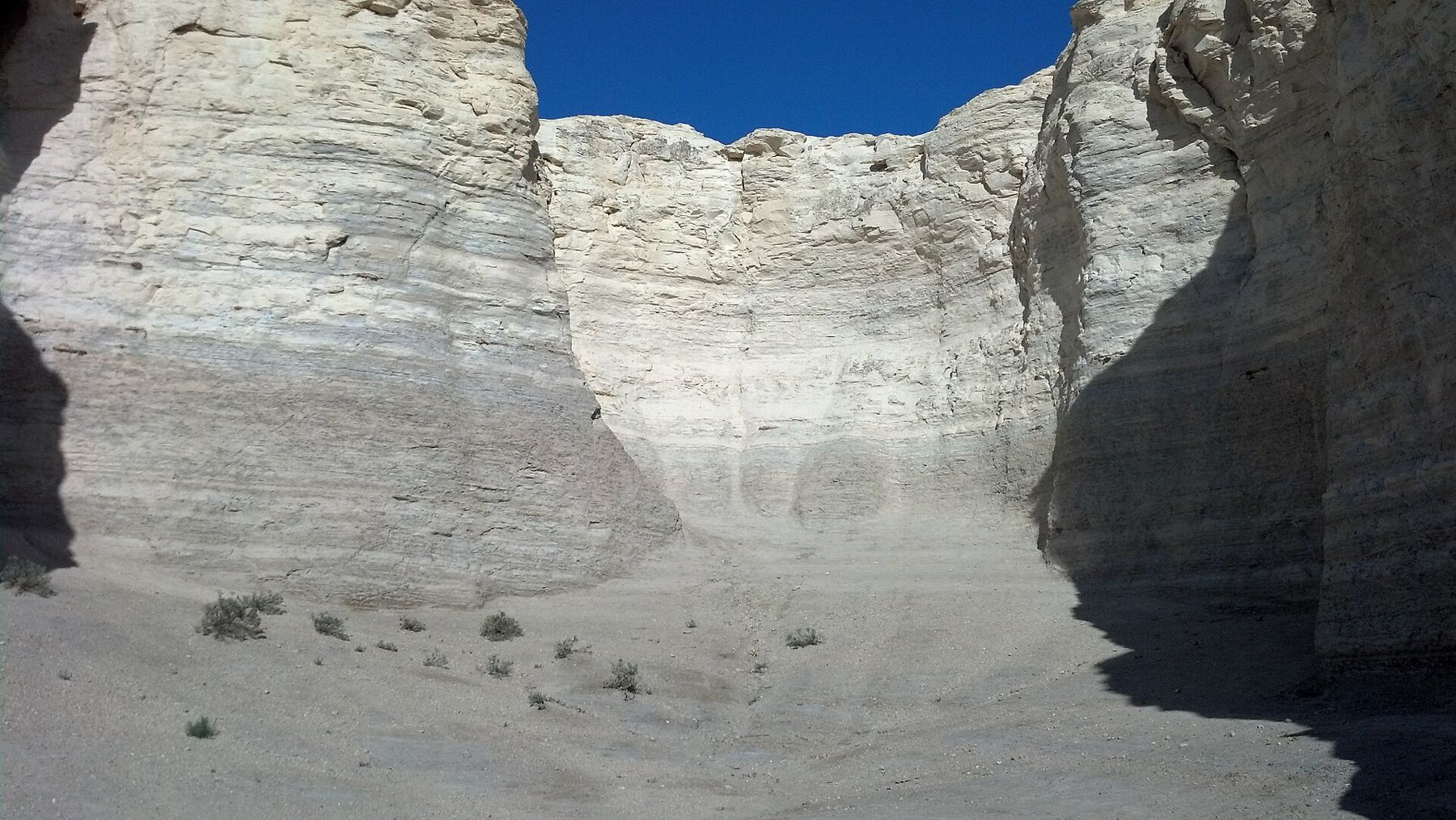
The view from the rim is wide: white and cream walls cut into the plain, the grass running flat to the horizon above them, and almost nothing made by people in sight.
When to go and how to see it
Spring and fall are the gentlest seasons here. Summer is hot and bright, with afternoon thunderstorms that can turn the gravel roads to grease in minutes. Winter is cold, windy and lonely, but clear days can be very good for photographs.
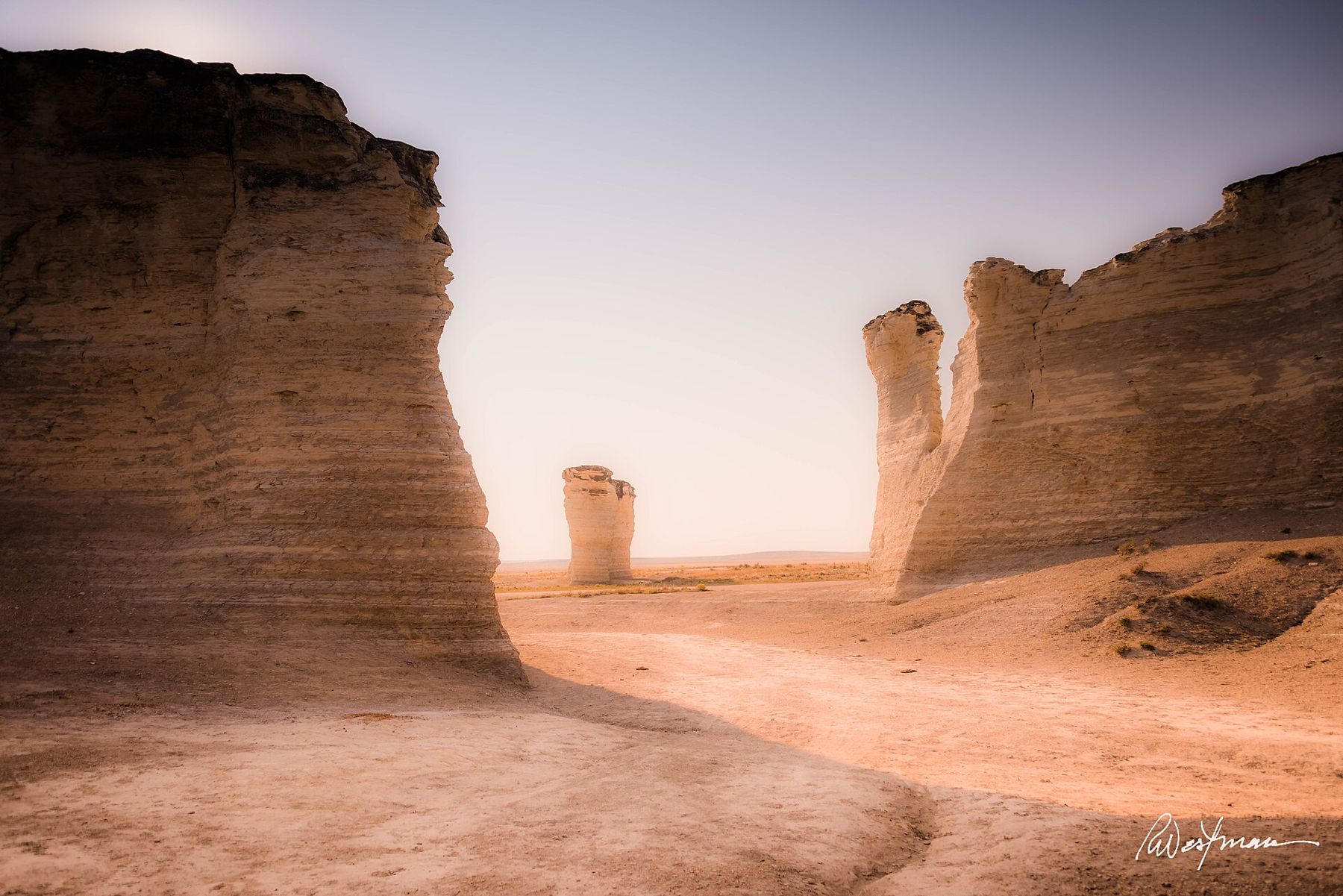
Light matters at Monument Rocks. At noon the chalk is flat and glaring. In the hour after sunrise and before sunset the spires turn gold and pink, and long shadows show every ledge. On clear, moonless nights the sky over Gove County is very dark, and the pale rocks under the stars are something to see; read up on stargazing in Kansas before you plan a night visit, and remember the rules about staying on the road still apply.
A few practical points:
- Fill the tank and carry water. There are no services at the rocks or at the state park.
- After heavy rain, the gravel and clay roads can be impassable. If you are unsure, wait a day. A guide to driving the back roads covers the basics.
- Watch the sky. Storms build fast out here, and there is no shelter at the rocks. Follow official warnings, and if one is issued, leave early and head for solid shelter in town rather than waiting it out in the open.
- Rattlesnakes live in the chalk country. Watch where you step and put your hands.
Plan a full day to see both places. Oakley has a small fossil museum worth a stop, and to the south the canyon lake and pueblo ruin at Lake Scott State Park make a fine second day.
The bands are seasons and centuries of sea floor stacked one on another.
Camera work
- Hu NhuCC BY-SA 4.0
- Art davisCC BY-SA 4.0
- Mufasa2414CC BY-SA 4.0
- James St. JohnCC BY 2.0
- timlitwCC BY-SA 3.0
- Wes15560CC BY-SA 4.0