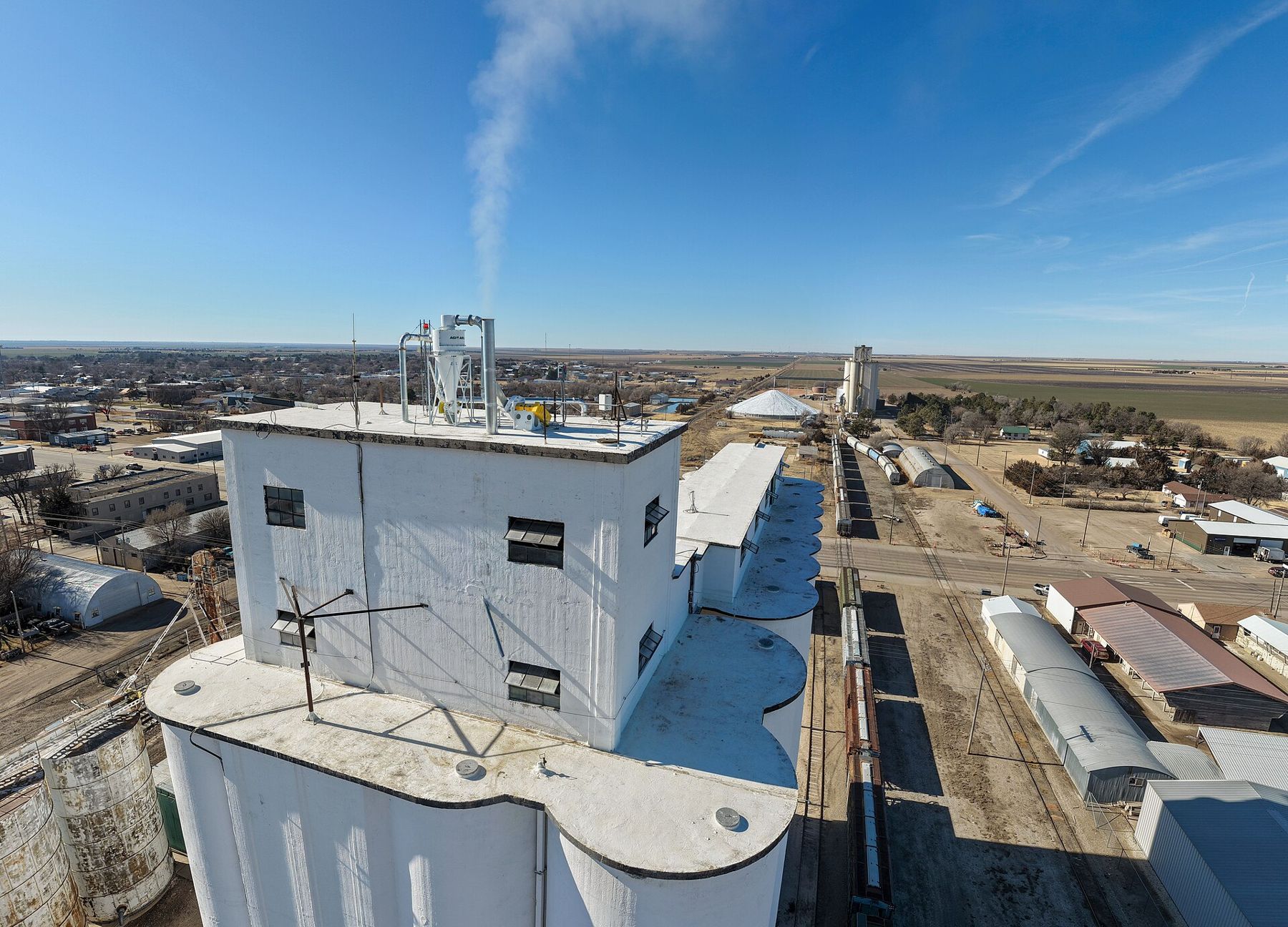
On the plains you see the next town long before you reach it, because its grain elevator rises above everything else. Each one marks a railroad, a harvest and a farm economy.
Elevator towns usually have fuel, but small ones may not. Expect trucks turning in harvest season, unmarked rail crossings on county roads, and gravel lanes beside the tracks.
On the high plains the horizon is so open that a town shows up as a single tall shape ten or fifteen miles away. Nearly always it is a grain elevator: a white concrete block or a weathered wooden tower beside the railroad, taller than anything else for miles. Kansas has hundreds of them. Once you learn to read them, they tell you a good deal about how this country was settled and how it still makes its living.
Why every railhead has one
The railroads came first. In the decades after the Civil War, lines spread across Kansas, and along them towns were laid out every several miles, close enough that a farmer with a wagon could haul grain to the tracks and get home the same day. At each siding someone built a place to receive, weigh, store and load grain. That was the elevator, and the town grew around it.
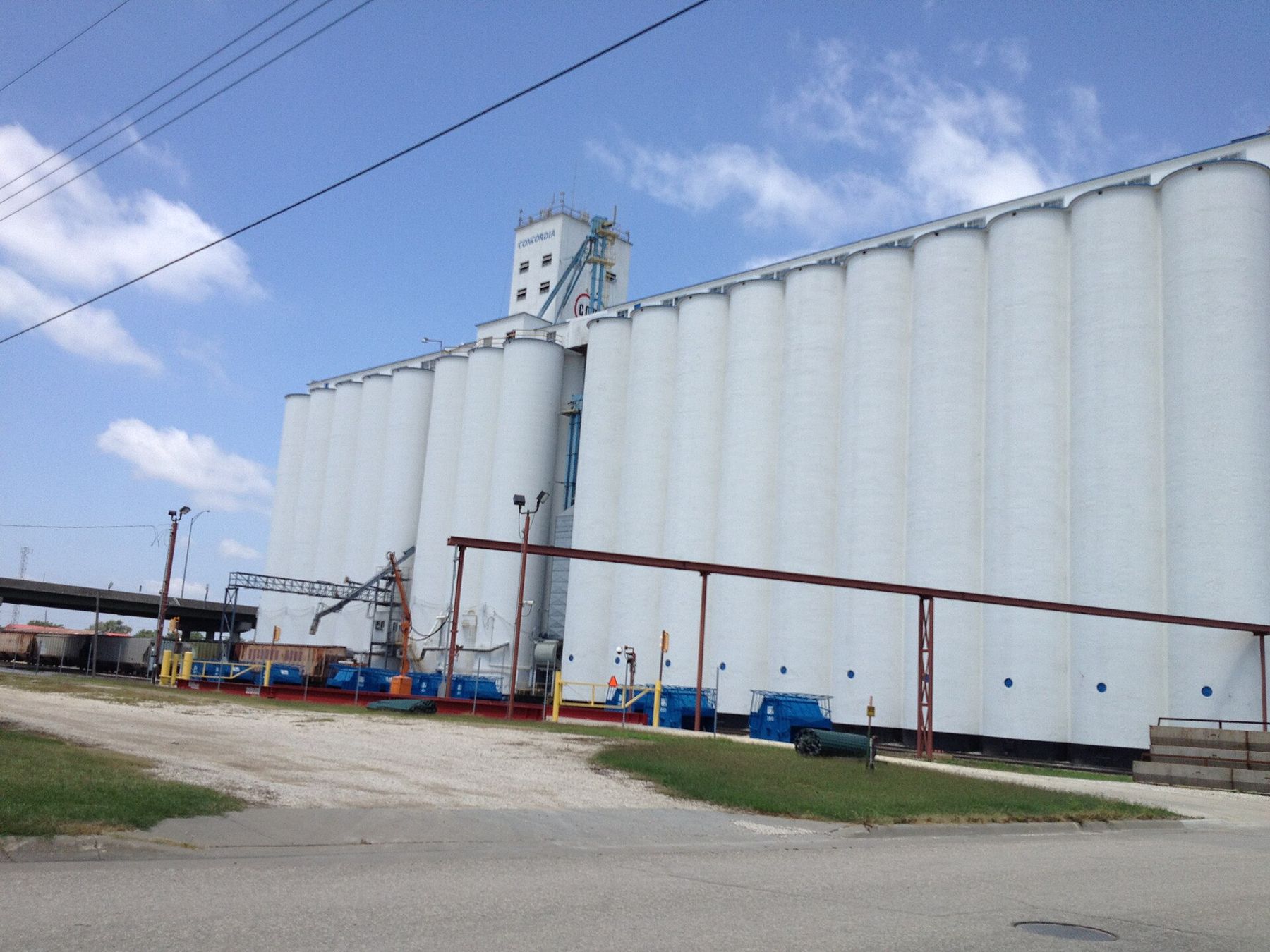
The earliest elevators were wood, tall narrow structures sheathed in boards or metal. From the early twentieth century, builders turned to reinforced concrete, poured in continuous slip-form pours that made tall round bins in rows. Concrete resisted fire and rot, and it could be built much taller. Many towns have both: an old wooden elevator beside newer concrete bins, and often round steel bins added later.
Some grew enormous. Hutchinson's long concrete elevator stretches about half a mile, and in wheat towns large and small the elevator is still the biggest structure in sight.
How an elevator works
The idea is simple. A truck drives onto a scale and dumps its grain into a pit. A vertical conveyor called the leg, a belt with buckets on it, lifts the grain to the top of the tall headhouse. From there gravity does the rest: spouts direct the grain into whichever bin is assigned to it. When it is time to ship, grain runs out the bottom of the bins and back up the leg to load rail cars or trucks.
The tall square tower above the bins is the headhouse, and it is the part that gives each elevator its silhouette. A sample is tested on arrival for moisture, weight and quality, and the price the farmer receives depends on it.
Grain dust is explosive, and elevator work carries real hazards: falls, entrapment in grain, and the machinery itself. That is one reason you admire elevators from outside the fence.
The wheat economy
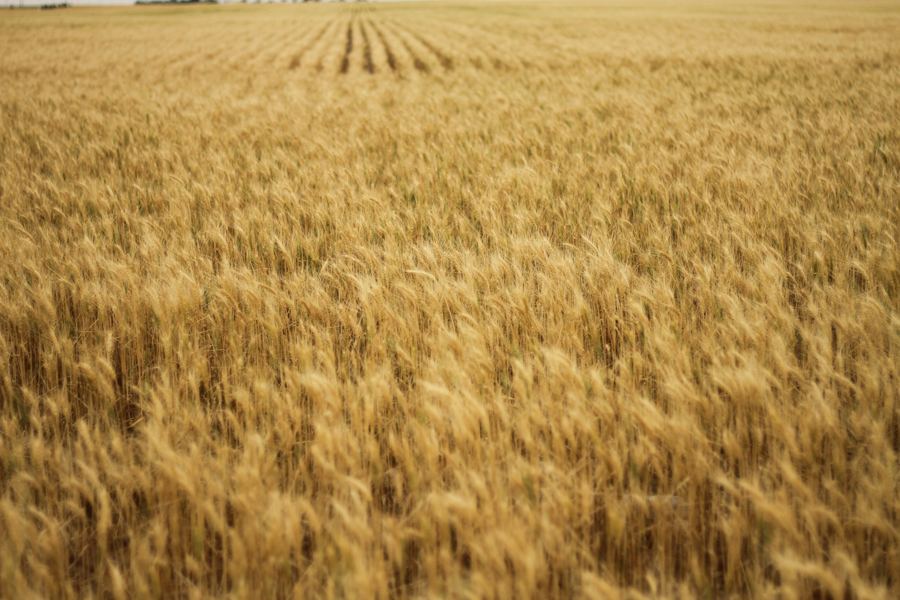 Turn off hereWheat harvest in June
Kansas is wheat country, and most of what it grows is hard red winter wheat, planted in fall and cut in early summer. The well-known story credits Mennonite immigrants of the 1870s with bringing the Turkey Red variety that suited the plains; the full history is more complicated, but hard winter wheat did transform the state, and Kansas is still often the nation's leading producer. The elevators fill fastest during the wheat harvest in June and July, when trucks line up at the scale from early morning until late at night.
Corn, sorghum and soybeans move through the same elevators in the fall. From the local elevator, grain heads by rail or truck to larger terminals and on to mills, feedlots and export ports. Many elevators are run by farmer-owned cooperatives, which in small towns are often the largest business on Main Street.
Railroads have changed. Many branch lines have been abandoned, and the elevators along them are empty or used only for storage. Others, on main lines, now load long trains of covered hopper cars that carry grain straight to distant terminals.
Reading the landscape
Once you know the pattern, you can see the old railroad map in the land. A line of elevators every several miles marks a working or abandoned rail line. A tall elevator with no tracks beside it usually means the rails were pulled up. A town with no elevator at all often grew for some other reason, or lost its railroad early.
From the back roads you can trace an old branch line by following its elevators from town to town. Along the way you will see the section-line grid, the shelterbelts around farmsteads and the shapes of the old depot towns, with their brick banks and false-front stores grouped around the tracks.
Photographing elevators
Elevators are generous subjects. They stand alone, catch light well and change with the sky.
- Low light at sunrise and sunset turns white concrete warm and throws the bins into relief.
- Distance works: a long lens from a mile away, with wheat or stubble in front, shows how the elevator commands the plains.
- Weather helps: a storm building behind a white elevator is a classic plains picture, best taken from a safe distance with a way out, as the guide to storm season explains.
- Night brings work lights at harvest and dark silhouettes against the stars the rest of the year.
Stay on public roads and right-of-way. Elevator yards are private, busy work sites with trucks moving and machinery running. Do not cross tracks except at crossings, do not climb anything, and keep your car out of the way of trucks at the scale. Trains move along these lines at any hour, and a train can take a mile or more to stop.
Why they matter
Every elevator is a record of people who bet on this country: the railroads that laid out the towns, the farmers who broke the sod, the cooperatives that pooled their grain. Some have been lost to fire or demolition, and in a few places old wooden elevators have been saved as landmarks. Drive any highway across western Kansas and count them as they come up on the horizon. They are the closest thing the plains have to a skyline, and each one tells you exactly where you are.
Camera work
- Quintin SolovievCC BY 4.0
- PaulmcdonaldCC BY-SA 3.0